
8.4oz slim cans are a familiar US energy drink size cue, but the buyer still has to prove the 250ml slim body, 200 end, liner, barcode panel and filling-line setup before ordering.
The 8.4oz can is closely associated with the concentrated energy drink occasion in the United States. It feels portable, controlled and premium, and it lets a brand communicate caffeine or functional intensity without using a large can. The format is not a magic shortcut. A sourcing team still needs exact dimensions, artwork real estate, lid compatibility, coating discussion and filling plant confirmation. Baixi Cans supports buyers who want printable slim 250ml cans for energy drinks, mixers and functional beverages.
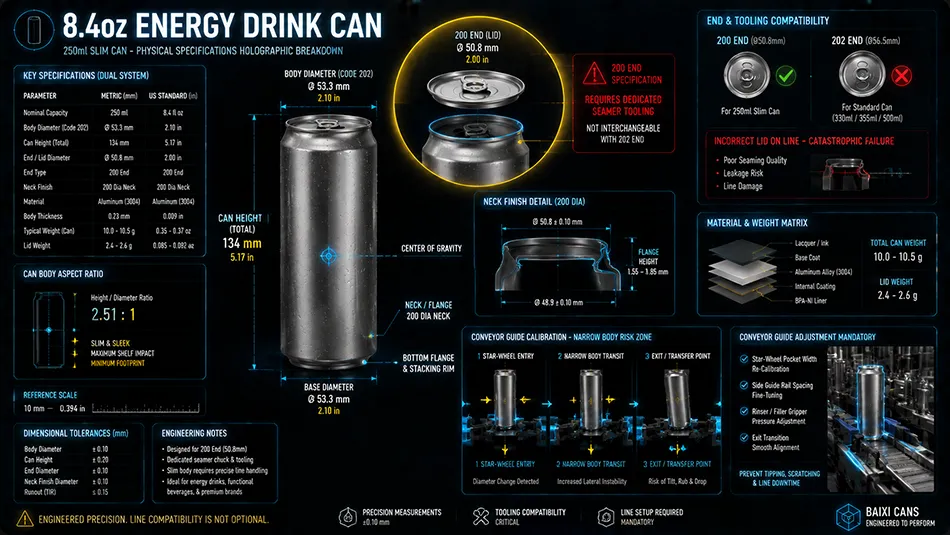
An 8.4oz slim can is commonly understood as a 250ml slim aluminum can. According to Cask's North American can specifications, 8.4 oz / 250ml is listed with 202 diameter, 503 height and 200 end. According to TricorBraun's 8.4 oz slim brite can listing, an 8.4 oz slim brite aluminum can is listed with 250ml capacity, 200 diameter neck finish and total height of 5.17 inches. According to Great China Metal's Slim 250 specification, a Slim 250 can is listed with 250ml capacity and 200 end, 202 body and 504 height. These are useful references, but final purchase specs should come from Baixi's drawing and the filling plant's approval.
| Buyer term | Technical meaning | What to verify |
|---|---|---|
| 8.4oz | Approx. 250ml | Label units, serving size and market language |
| Slim body | Often referenced as 202 body | Exact diameter, height and printable area |
| 200 end | Common end reference for this slim format | Lid coating, seamer tooling and lid quantity |
| Energy drink cue | Controlled, concentrated serving | Formula stress, caffeine language and channel fit |
The phrase 8.4oz helps US buyers, sales teams and retailers understand the package quickly. It does not tell the filling line everything it needs to know. The plant needs body diameter, end size, height, seam requirements, lid supply, carrier, case pack and whether the format has run before. The designer needs a dieline, barcode panel and non-print zones. The quality team needs coating, sample and inspection expectations. This is why a buyer should use 8.4oz as commercial language and 250ml slim with exact drawing details as procurement language. The useful inference is that market familiarity should speed communication, not replace technical release evidence.
Two cans can both be sold as slim and still have different line consequences. Slight differences in height, neck profile, end supply or packaging can change the plant conversation. A co-packer that handles one 250ml slim format may still ask for samples and drawings before accepting another. This is normal and healthy. It means the plant is protecting the launch. Buyers should welcome that detail early because it is cheaper to confirm the body and end before artwork and deposits than to discover a format problem after cans arrive. The safest answer is the one tied to the exact drawing, not to the word slim.
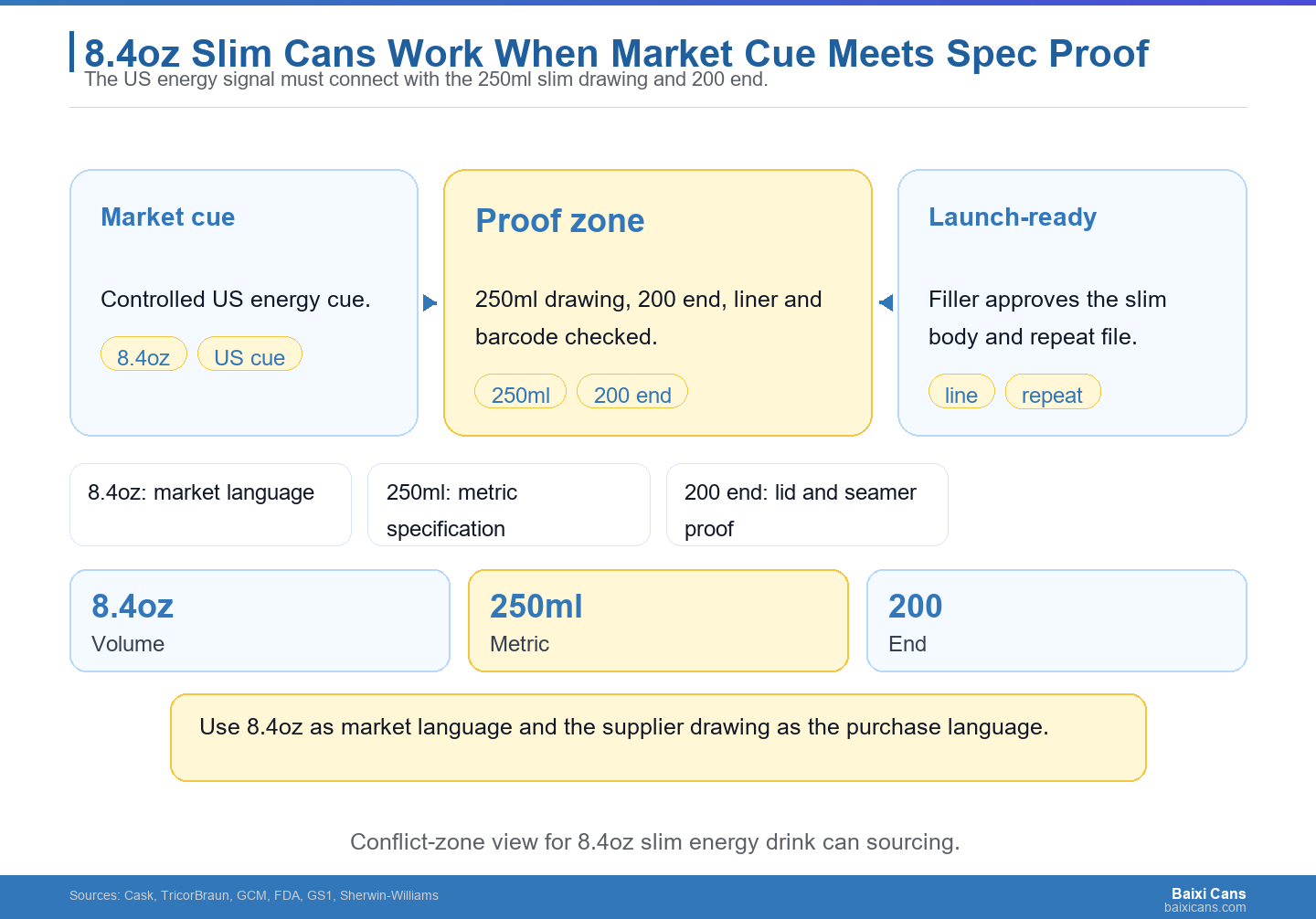
The 8.4oz slim can fits the original energy drink idea: a compact portion with a strong functional promise. It is small enough to feel controlled and portable, but tall enough to create a distinctive shelf silhouette. According to Krones' Craftmate C brochure, 250ml appears alongside larger can volumes such as 330ml, 474ml and 500ml in modern filling equipment examples. That helps explain why the 250ml class can sit inside a normal can-format conversation while still giving brands a sharper market signal than a standard body.
Energy drink shoppers do not always want the largest can. Some want a fast, controlled serving with a clear caffeine or functional cue. The 8.4oz slim format supports that message because the hand feel and vertical shape imply concentration. It can also protect the brand from looking like a generic soda or value drink. The trade-off is that the product must justify the smaller quantity. Flavor, caffeine level, brand story and price point have to make the consumer feel that the can is deliberate, not undersized. If the shelf set is dominated by larger value cans, the brand may need stronger flavor, function or premium cues to defend the size.
For US channels, label language needs careful review. According to FDA food labeling guidance, the guide summarizes required statements under applicable labeling laws and regulations. Energy drinks may need nutrition facts, ingredient lists, manufacturer or distributor details, net contents, caffeine-related language and other market-specific statements depending on formulation and positioning. The small body makes this harder. A buyer should make the compliance panel part of the design from the beginning instead of forcing required text into leftover space after the brand graphics are finished. This is also where market counsel or importer feedback should arrive early, before the final proof becomes expensive to change.
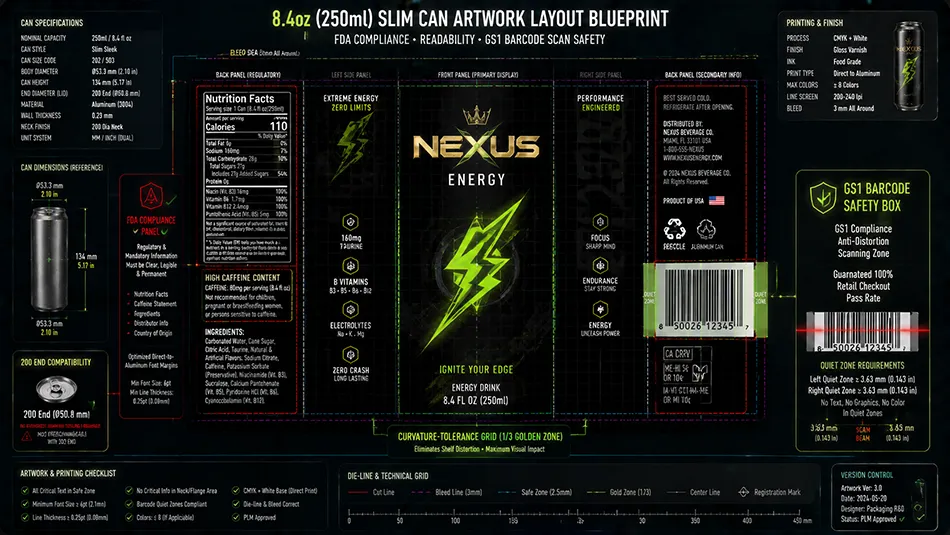
On an 8.4oz slim can, the brand has less horizontal room than on many mainstream can bodies. According to GS1 barcode placement guidance, cans and cylinders need barcode placement that protects scanability and quiet zones. That matters in US convenience, grocery and club channels, where a weak barcode can create avoidable retail friction. The design team should test barcode size, placement, contrast and curvature before print approval. A premium can should not make the cashier rotate the package repeatedly to find a readable code.
A strong 8.4oz slim can design usually has a clear vertical order: brand, flavor, function, required information and barcode. The body is narrow, so long horizontal copy and crowded icon rows can become hard to read. Metallic finishes and dark backgrounds can reduce barcode contrast if not tested. A physical proof or pilot can can reveal small type and reflection issues that do not show up on a flat PDF. The buyer should review the proof at actual size and under normal retail lighting before approving production. The design should look calm enough that the shopper understands the product in one rotation, not three.
Energy drink brands often expand from one hero SKU into flavors, sugar-free versions, special editions or retailer exclusives. The first 8.4oz can design should leave a system for that expansion. If every inch is filled with claims, the next flavor may have no clear place to sit. If the barcode panel is too tightly integrated into artwork, regional label changes become painful. A cleaner system helps buyers repeat the same can body, lid and layout while changing flavor cues and market copy with less risk. It also helps procurement keep one technical base file while marketing changes controlled artwork layers.
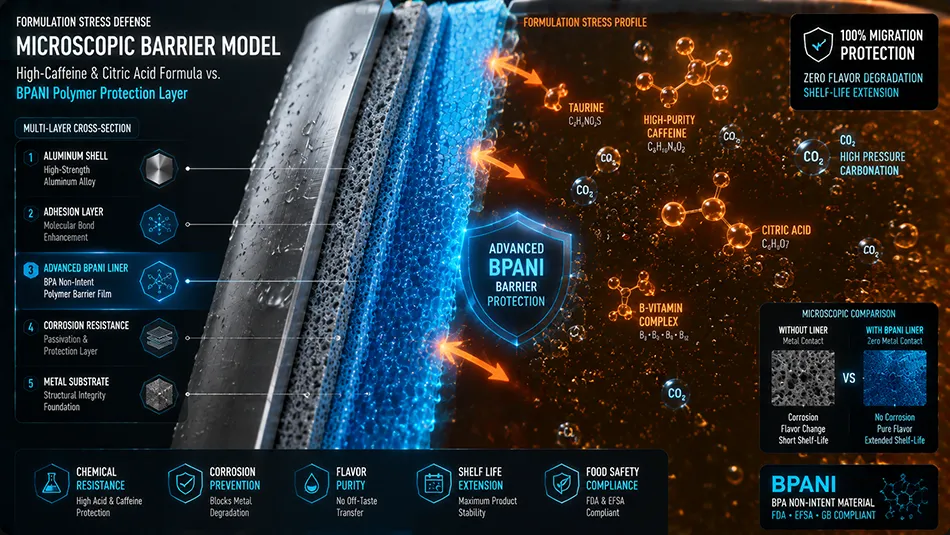
Energy drink cans carry formula risk that plain water cans do not. They may contain acids, caffeine, vitamins, sweeteners, colors, botanicals and carbonation. According to Sherwin-Williams beverage coating information, beverage coating systems include options for energy drinks and beverages with citric acid. The buyer should discuss pH range, carbonation, fill temperature, shelf life and target market before assuming any 8.4oz slim body is suitable. The end should be discussed at the same time because the lid also has coating and seaming implications.
An 8.4oz slim can project usually depends on a matching 200 end. The buyer should confirm lid supply, lid coating, opening style, end packing and seamer setup before release. Baixi's aluminum can lid options should be discussed alongside the can body because a perfect body without matching ends is not a fill-ready package. For export projects, confirm whether lids ship together or separately and whether the lid quantity includes a reasonable allowance for filling operations. This check protects the production date because a missing end is as serious as a missing can body.
If the energy drink formula changes after the can is selected, the coating and label assumptions may need to be reviewed again. A new acid system, sweetener, botanical extract, caffeine level or shelf-life target can change package stress or label copy. This is especially important for startups that keep refining flavor while packaging is already being sourced. The can order should not race ahead of the formula. It should move in step with the product that will actually be filled. When the formula is unstable, keep the decoration route flexible and avoid locking a large quantity of final artwork too early.
8.4oz slim cans often carry strong brand graphics, so buyers may want direct printed cans immediately. The better choice depends on demand certainty. According to Blue Label's digitally printed can information, some digitally printed can programs publish low-thousands minimums per design and separate proof timing from production timing. According to Blue Label's comparison of printed cans, sleeves and labels, printed cans can arrive ready to fill, while labels add a separate operation. These examples help frame the route decision: protect flexibility while learning, then move toward scale when the SKU is proven.
A brand entering the US energy drink market may need to test flavor, caffeine level, pricing, retailer fit and regional label language. Flexible decoration can reduce the cost of being wrong. It can also help the brand create limited drops or market-specific packaging. The buyer should still manage proofing carefully because a narrow body magnifies small mistakes. Flexible production is not permission to skip barcode, color, liner or line checks. It simply makes early learning less costly. The practical insight is to spend flexibility on market learning, not on avoidable specification mistakes.
Once the 8.4oz energy SKU has stable demand, scale printing can simplify filling and create a strong brand finish. Before moving to a large artwork-specific order, the buyer should freeze the drawing, lid, liner, caffeine language, nutrition panel, barcode, importer details, color target and packing method. If any of those items is still uncertain, the unit price should not be the only decision. Packaging inventory becomes expensive when a label claim or market rule changes before the cans are filled. Scale is valuable only when the brand is confident that the same artwork can be repeated.
A good inquiry for 8.4oz slim cans should include target market, beverage type, carbonation, pH range if available, filling process, can drawing requirement, lid requirement, liner preference, decoration route, quantity, sample plan and arrival date. Buyers can compare Baixi's aluminum can range, review certificate information and send project details through Baixi Cans' contact page.
The 8.4oz slim can is powerful because it combines a familiar US energy drink cue with a compact, premium package. It becomes a dependable purchase only when the buyer converts that cue into exact dimensions, compatible lids, liner evidence, compliant artwork and filling-line proof.
Buyers should also decide how the 8.4oz can will sit beside future sizes. If the brand later adds a 12oz, 16oz or 500ml product, the first slim can should already have a flexible visual system and a saved technical file. That means keeping the approved drawing, lid code, coating statement, color target, barcode position and carton plan together. The strongest 8.4oz program is not only a good launch can; it is a platform that can support the next SKU without forcing the brand to rebuild everything from scratch.
8.4oz slim cans are a market signal first; they become a production format only after the 250ml slim drawing, 200 end and filling line agree.
In most beverage sourcing conversations, 8.4oz and 250ml refer to the same approximate volume, but that only solves the naming question. Buyers should still confirm the exact slim can drawing, end size, height, printable area, lid supply and filling-line fit before placing an order, because market language does not replace technical release evidence.
They match the energy drink cue of a compact, controlled and functional serving, which is why the size has become familiar in US energy channels. The slim shape also creates a premium vertical shelf signal, helping brands separate concentrated energy drinks from standard soda, larger value cans or broad hydration formats.
Common 8.4oz slim references use a 200 end, but the buyer should confirm the exact end specification with the supplier and filling plant. Lid supply, lid coating, seamer compatibility, opening style, packing and quantity allowance all matter because the end is part of the fill-ready package, not a late accessory.
US energy drink buyers should check formula stress, liner, 200 end availability, barcode placement, FDA-related label statements, artwork proof, filling-line setup, MOQ, lead time, carton plan and export packing. These checks turn the familiar 8.4oz market cue into a reliable order that can be filled, scanned, shipped and repeated.

