
The African beverage aluminum can market is currently experiencing a "cognitive dissonance"—local filling plants are facing daily can shortages, yet premium aluminum cans from China often sit at ports for months before they can be cleared. This is not a capacity problem; it is a systemic issue involving logistics, compliance, and supply chain certainty.
In a market where a single week of production downtime can cost a mid-sized brewery upwards of $100,000, the "cheapest" shipping quote is often the most expensive trap. This guide deconstructs the five most common logistical barriers and provides verified solutions based on Baixi Cans deep footprint across the continent.
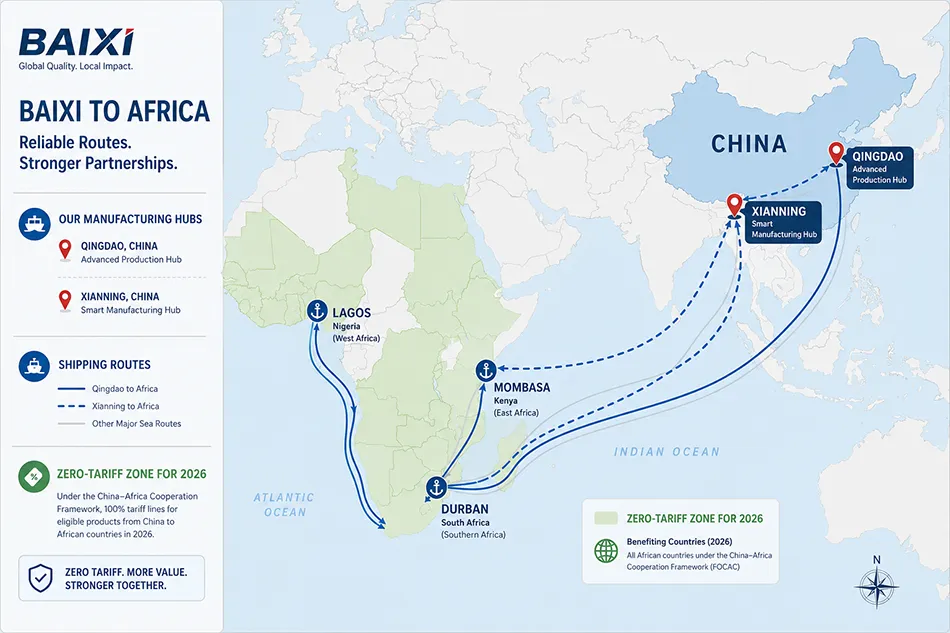
| Your Sourcing Scenario | Primary Challenge | Baixi's Integrated Solution |
| Nigeria Soft Drinks (West Africa) | Lagos Port congestion (>15 days delay) | DDP Door-to-Door + Pre-clearance Document Package |
| Kenya/Tanzania (East Africa) | New DEAS 879 Standards (Effective 2025/26) | Pre-tested/Certified cans per DEAS 879 specs |
| South Africa Market | Dominance of local Nampak capacity | Differentiation: Flexible MOQ + Multi-can types + Cost edge |
| First-time African Importers | Unknown certification requirements | One-stop compliance (SONCAP, PVoC, KEBS, etc.) |
👉 Get a Free Africa Market Entry Assessment
To succeed in the African beverage sector, one must understand that "The Port is the Bottleneck." Navigating this requires a shift from reactive logistics to proactive supply chain engineering.
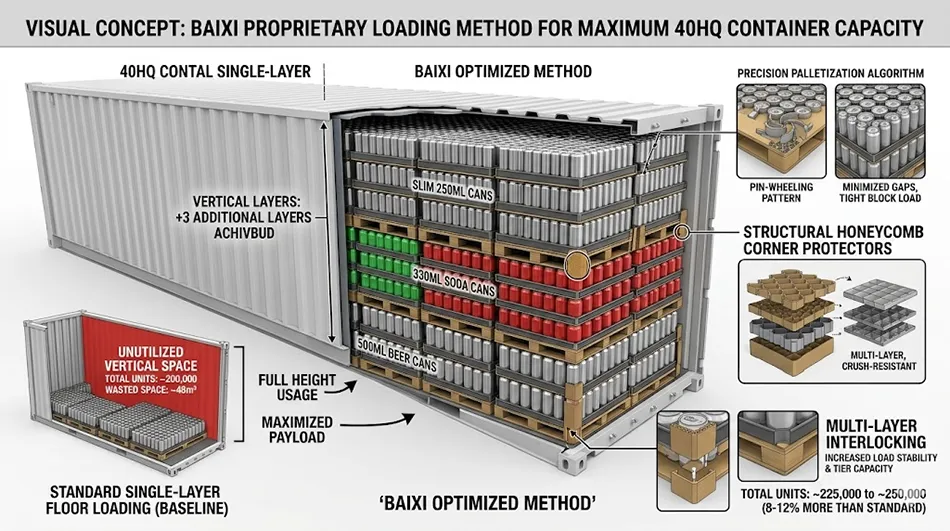
The infrastructure in many African ports has struggled to keep pace with the continent's 12% beverage growth. Lagos Port (Nigeria), designed for 1.2 million TEU, is handling over 1.5 million TEU—a 25% overload. Similarly, South Africa’s Port of Durban has faced delays of up to 28 days due to aging equipment. In 2026, shipping giants have introduced Peak Season Surcharges (PSS) ranging from $300 to $700 per TEU.
The Baixi Response: We don't just "ship and hope." We utilize specialized logistics partners who offer DDP (Delivered Duty Paid) services in Lagos and Mombasa, moving the "clearing risk" from your desk to ours. Furthermore, because aluminum cans are light but bulky, Baixi provides a proprietary loading scheme that fits 8-12% more units per 40HQ container, effectively diluting the freight cost per can and neutralizing the impact of PSS.
The regulatory landscape is shifting toward regional harmonization. The East African Community (EAC) has moved toward the DEAS 879:2025 Specification, while Nigeria's SONCAP has intensified its "pre-shipment" scrutiny. For a buyer, a lack of the correct test report can lead to 100% cargo seizure.
The Baixi Response: Every batch of our
While Nampak and GZI Industries are regional giants, their production lines are often locked into multi-year contracts with global "Big Soda" brands. This leaves mid-sized African brands struggling with high MOQs and long lead times for specialty sizes.
The Baixi Response: We offer what the local giants cannot—Agility. Whether you need the standard
For an African factory, the "Cash-to-Cash" cycle for imported cans can stretch to 120 days. This creates a massive working capital strain.
The Baixi Response: We assist in "Inventory Level Engineering." By coordinating with our logistics partners, we help clients establish a rolling order rhythm. We also work with reliable trade finance and insurance partners to provide payment structures that reflect the reality of African maritime transit, ensuring your capital isn't "frozen" on the water longer than necessary.
In 2026, the global primary aluminum shortage reached a critical 1.28 million tons. With mining license upheavals in West Africa, the cost of "African-made" cans is increasingly volatile.
The Baixi Response: As a top-tier Chinese manufacturer, Baixi leverages its massive procurement scale to lock in aluminum prices 6-12 months in advance. While local African suppliers may be forced to pass material spikes directly to you, our price stability acts as a hedge for your business, ensuring your retail price remains competitive despite global market turbulence.
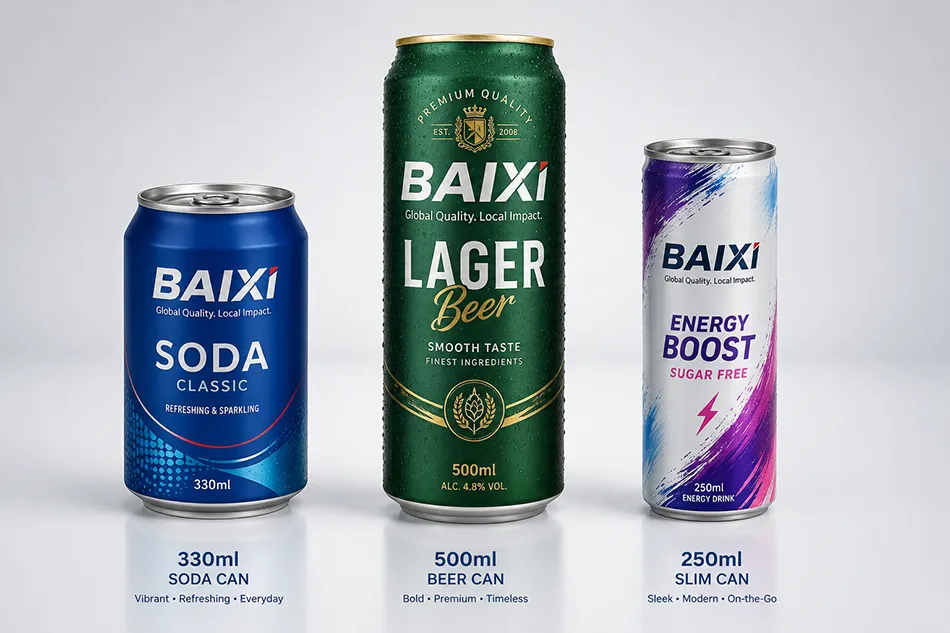
Understanding the "Canning Culture" of each sub-region is vital for product development and marketing success.
| Region | Primary Beverage Type | Popular Can Sizes | Import Opportunity |
| West Africa | CSDs, Beer, Energy Drinks | 330ml Standard, 500ml | DDP Logistics is the key entry barrier. |
| East Africa | Soft Drinks, Juices | 250ml, 330ml | High demand for DEAS 879 compliance. |
| Southern Africa | Beer, Premium CSDs | 330ml, 500ml | Specialty tabs and matte-finish cans. |
| North Africa | CSDs, Fruit Juices | 250ml, 330ml | 15-day transit via Mediterranean routes. |
The move toward the AfCFTA (African Continental Free Trade Area) is beginning to allow for "Hub and Spoke" distribution. We are increasingly helping clients in Kenya act as a hub for the wider East African market, utilizing our high-volume production to feed regional growth.
Africa is not a monolithic market; its beverage consumption habits exhibit significant regional variations, shaped by colonial history, climatic conditions, and the degree of urbanization. Through dynamic analysis of sales volumes across various regions, Baixi Cans has identified the following core preferences:
The West African market—particularly Nigeria—stands as a major stronghold for energy drinks and Carbonated Soft Drinks (CSDs).
The East African market is witnessing growing demand for fruit juices and premium sodas, and it is the region within Sub-Saharan Africa with the most stringent enforcement of packaging standards.
South Africa boasts the most mature beer industry on the African continent. While the local industry giant, Nampak, maintains a strong presence, its high production line changeover costs make it difficult for small and medium-sized brands to secure customized packaging support.
Baixi Cans success in the African market stems not only from our manufacturing capabilities but, more importantly, from our deep understanding of the underlying logic of "Africa-China trade."
Technical Authority: We hold FSSC 22000 certification and have specifically optimized our internal BPA-NI (BPA-Non-Intent) coating technology for aluminum cans to suit Africa's hot and humid climate. This ensures that—even after being stored for six months in a warehouse in Lagos at temperatures reaching 40°C—both the beverage's flavor profile and the packaging's safety integrity remain in their original, factory-fresh condition.
Comprehensive Product Lines: Baixi possesses the manufacturing capability to produce a full range of aluminum can sizes—from standard 202 and 206 lid types to Slim, Sleek, and Standard body profiles. Whether your filling line operates at a rate of 5,000 or 60,000 cans per hour, our dimensional tolerances are perfectly calibrated to ensure seamless compatibility.
Case Review: In 2025, we provided a newly established energy drink manufacturer in Kenya with a comprehensive, end-to-end service package—spanning everything from brand design consultation and aluminum can production to SONCAP certification assistance and DDP customs clearance in Mombasa. The client reported that Baixi’s solution shortened their product launch cycle by nearly 35%.
A: The PC (Product Certificate) serves as a long-term qualification credential for the factory and its products, whereas the SC (Shipment Certificate) acts as the clearance document specifically required for the release of each individual shipment. Baixi possesses authorized laboratory test reports and works directly with certification bodies to assist you in quickly obtaining the necessary Product Certificate (PC), while also conducting on-site loading supervision prior to shipment.
A: The new regulations place greater emphasis on the physical safety of the cans during stacking. The 500ml beer cans manufactured by Baixi boast an axial load strength exceeding 850N—far surpassing the standard requirements. This ensures that, even after enduring the rigors of sea freight and overland transport through the East African interior, the cans at the bottom of the stack will never burst under pressure.
A: Shipping routes to Africa are highly susceptible to fluctuations caused by Peak Season Surcharges (PSS) and Bunker Adjustment Factors (BAF). By signing long-term agreements (Fixed Rate Agreements) with shipping carriers, Baixi is typically able to lock in logistics rates for 3 to 6 months for our annual contract clients, thereby mitigating the risks associated with market price volatility.
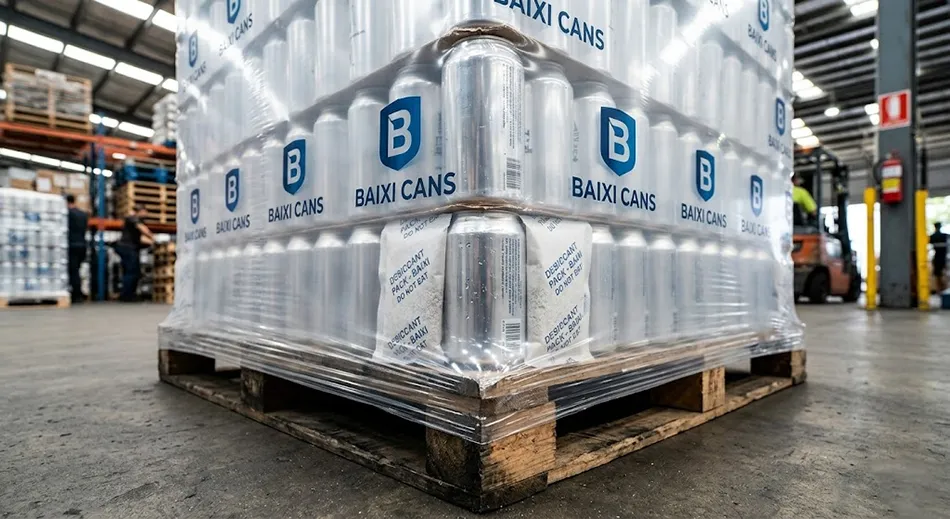
A: This is one of the most common pain points in maritime shipping. Baixi employs a "three-dimensional protection" system comprising industrial-grade heat-shrink film sealing, a moisture-proof layer at the base of the pallet, and an ample supply of desiccant inside the shipping container. Furthermore, our printing inks feature exceptional resistance to UV radiation and salt-spray corrosion, ensuring that your brand imagery remains as vibrant and pristine upon arrival at the destination port as it was when it left the factory.
A: Yes, we do. To help African beverage brands meet their growing marketing demands, we have made our small-batch can tab customization service available. This offers significant strategic value for boosting social media engagement rates for energy drinks—for instance, by enabling "scan-to-win" promotional campaigns.

