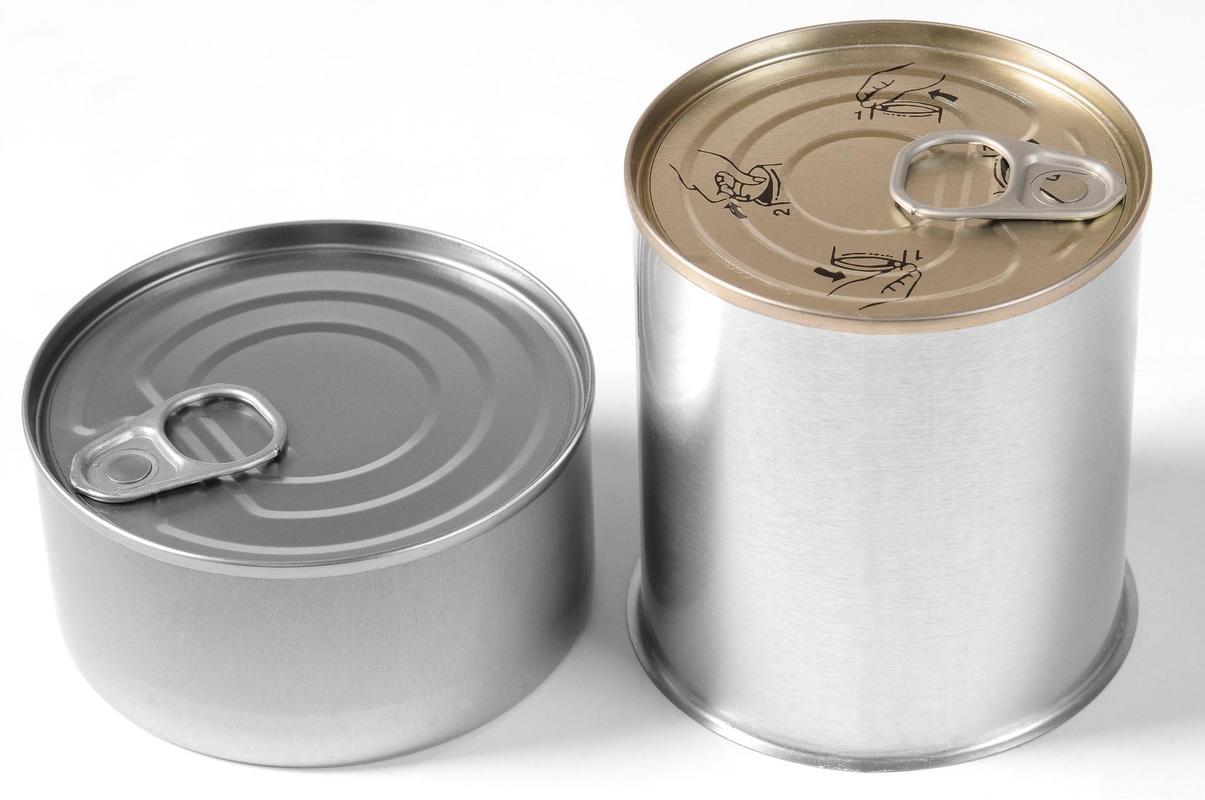
The anti-corrosion system of tinplate food cans is based on tinplate material, and a layer of anti-corrosion coating is applied on it, and then further improved by canning re-coating or spraying process. Therefore, the anti-corrosion performance of tinplate food cans is mainly considered around the following aspects.
Tinplate is composed of steel base, tin-iron alloy, tin layer, passivation film, and oil film. The steel base is composed of high-quality low-carbon boiling steel, the tin-iron alloy is the alloy layer produced during tin plating, the tin layer is pure tin, the passivation film is a chromium compound formed after passivation treatment, and the oil film is used as an anti-rust layer. In the composition of tinplate, the tin layer and the passivation film play a key role in corrosion resistance.
Generally speaking, the anti-corrosion performance of tinplate can be greatly improved after tin plating. The higher the tin plating amount, the stronger the anti-corrosion ability. But at the same time, it is also necessary to observe whether the tin plating layer is dense and uniform (determined by the level of soft melting process after tin plating) and whether there are oxide scale defects (the oxide scale is caused by impurities in the environment during tin plating, which is the weak point of tinplate corrosion resistance). It is worth noting that in addition to increasing the cost, the excessive thickness of the tin plating layer will also reduce the coating processing suitability of tinplate, and the tinplate printing manufacturer should consider it comprehensively.
In order to further enhance the sulfur resistance and corrosion resistance of tin-plated tinplate, after tin plating, the tinplate still needs to be chemically treated in a sodium dichromate solution to form a layer of chromium oxide and chromium hydroxide on the surface of the tin plating layer, that is, the passivation film. In theory, the thicker the passivation film, the stronger its corrosion resistance, but it will also cause the adhesion of the anti-corrosion coating to decrease during the post-processing process, so the thickness of the passivation film also needs to be paid attention to.
Of course, tinplate manufacturers generally cannot directly control the production process of tinplate, but we have the right to choose tinplate manufacturers with stable production quality and high product reputation as partners to ensure that the quality of the tinplate used meets the requirements.
By the way, for the difference in thickness tinplate processed by incoming materials, except for those specified by the customer, the side with thick tin layer is generally used as the inner coating surface, which is conducive to improving the corrosion resistance of food cans.