
Hard seltzer cans should be chosen by alcohol category, serving format, carbonation, flavor count, artwork stability and sourcing route, not by a generic slim-can trend.
The category looks simple on shelf: light color, clean label, bright flavor, usually a slim or sleek aluminum can. Behind that shelf signal, the buyer has to align formula, label language, can body, lid, liner, print route, MOQ, lead time and filling-line fit. Baixi Cans supports beverage buyers comparing slim, sleek and standard aluminum cans, compatible lids and export-ready packing for hard seltzer, RTD and low-alcohol beverage programs.
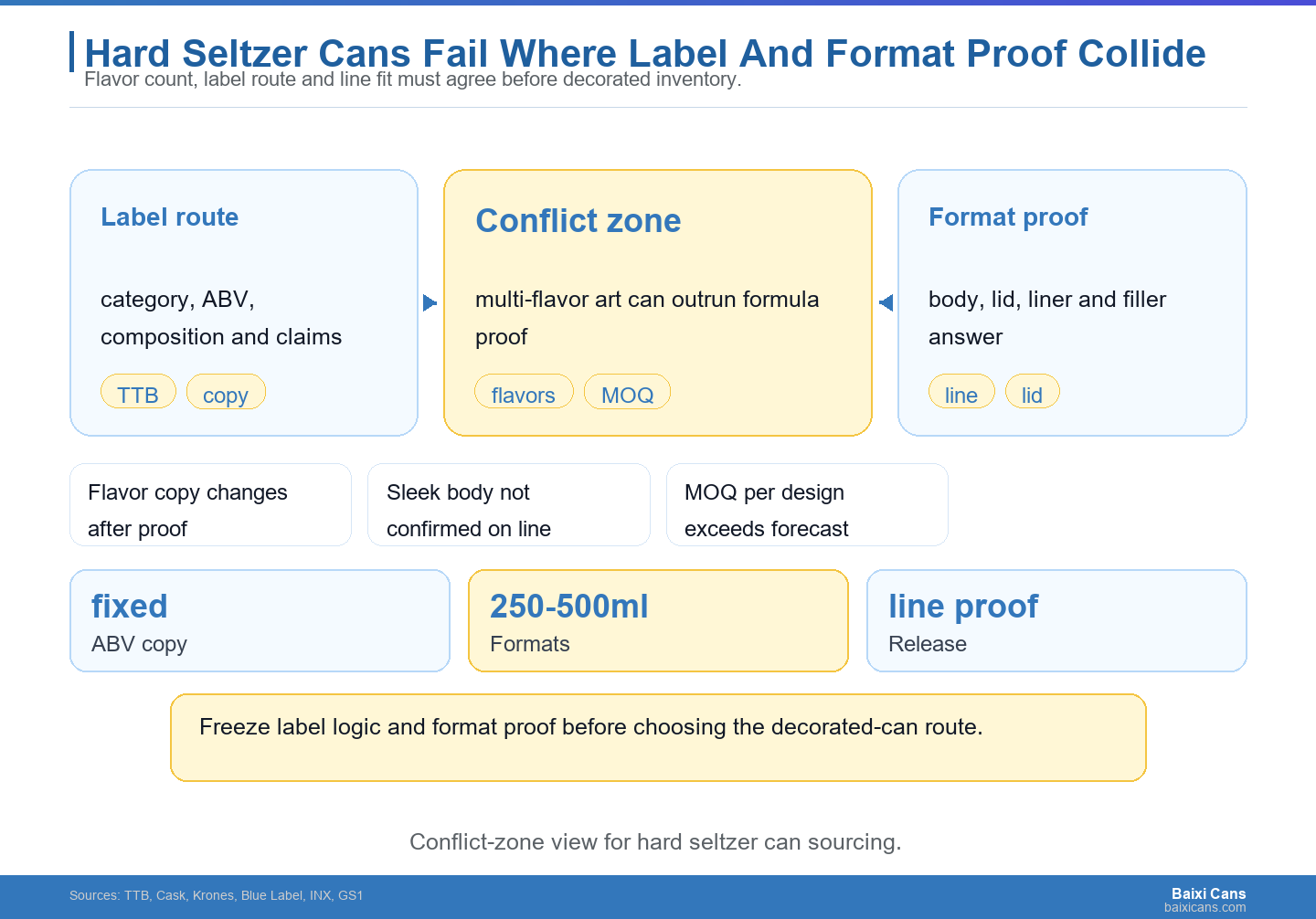
Hard seltzer is not a single regulatory shortcut. According to TTB malt beverage class and type guidance, malt beverage labels need a class and type designation or, for specialty products, a fanciful name and statement of composition. According to TTB alcohol-content guidance for malt beverages, an alcohol by volume statement is required in defined circumstances, and alcohol content statements may not be expressed as a range. According to TTB beer and malt beverage labeling and formulation guidance, brewers may have formulation requirements under federal beer rules. The buyer does not need to solve those rules alone, but packaging should not outrun label review.
| Project variable | Why it affects the can | Buyer gate before print |
|---|---|---|
| Alcohol base | Malt, sugar, wine or spirits routes can change label review and claims | Confirm category with compliance support |
| ABV statement | Alcohol content language must match applicable rules and market practice | Freeze approved wording before decorated inventory |
| Flavor system | Added flavors and colors can affect statement of composition and formula review | Review each flavor family before multipack design |
| Serving size | 250ml, 330ml, 355ml, 473ml and 500ml create different channel cues | Match can size to shelf language and line proof |
| Decoration route | Labels, sleeves, digital and offset print lock artwork at different points | Choose the route after copy stability is known |
A hard seltzer label is not just a marketing asset. It can include brand name, class or type wording, statement of composition, alcohol content, net contents, health warning, importer or producer details, barcode, recycling language, deposit marks and nutrition or ingredient information depending on market and product type. A buyer who approves can artwork before compliance review risks paying for decorated inventory that cannot be used. The safe sequence is to confirm the category, freeze the required label elements, then approve dieline and print proof. That is slower at the beginning and faster at the launch stage.
Hard seltzer brands often test flavors quickly: lime, berry, tropical, tea, lemonade, cocktail-inspired and seasonal variants. A small formula change can affect color, claim wording, flavor disclosure, allergen review, sweetener statements or retailer information. That does not always change the can body, but it can change the artwork. Multi-flavor programs should therefore separate the stable brand architecture from flavor-specific legal copy. If the artwork is still moving, blank cans with labels or sleeves may protect the launch better than a large offset printed-can order.
The safest artwork system treats each flavor as its own release file. The front-of-can design can share a common brand block, but flavor name, color cue, statement of composition, alcohol statement, nutrition panel, barcode and case code should be checked by SKU. This prevents a common hard seltzer mistake: approving a beautiful master design and then discovering that one flavor needs more words than the panel can hold. A multi-flavor pack is only as stable as its least stable flavor file.
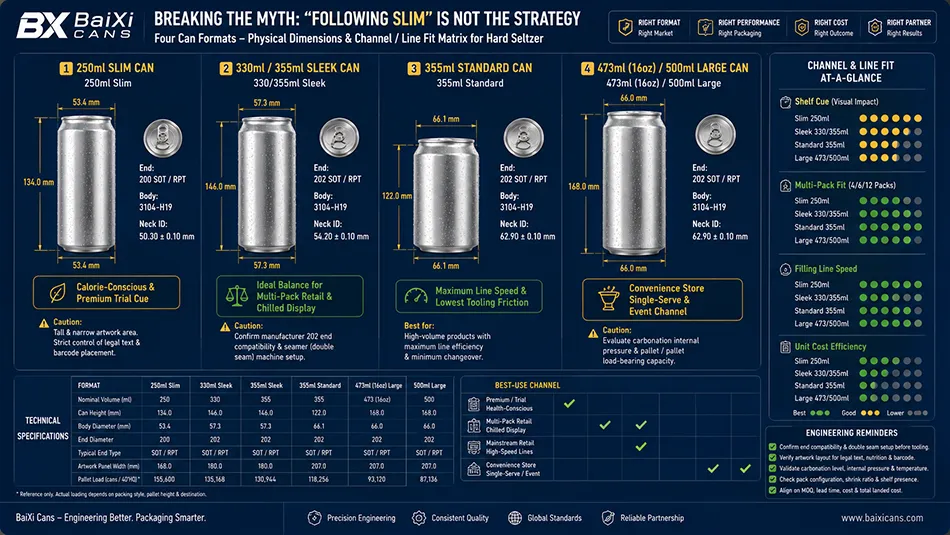
Hard seltzer buyers usually compare 250ml slim, 330ml sleek, 355ml sleek or standard, 473ml / 16oz and 500ml formats. According to Cask's aluminum can specifications, public can references include 250ml, 330ml, 355ml, 473ml and 500ml options, with different body and end combinations. According to Krones' Craftmate C brochure, modern filling discussions can include 250ml, 330ml, 474ml and 500ml examples. The right hard seltzer format is the one that matches the channel while staying easy enough for the plant to repeat.
Slim cans can be strong for hard seltzer because the body shape supports lightness, portability and calorie-conscious positioning. A 250ml slim can can work for premium trials, lower-ABV serves or markets where smaller portions feel modern. The trade-off is limited label space and a stronger need for line confirmation. The brand may have long compliance text, multipack flavor marks and barcode needs that do not fit elegantly on a narrow panel. If slim is chosen for shelf style, the buyer should test the actual label hierarchy at can size before approving production.
For many hard seltzer programs, sleek 330ml or 355ml can bodies balance premium cue, familiar serving size and enough label area. They can work for multipacks, chilled retail and event channels without looking as heavy as a standard large can. The sourcing question is whether the filler has run the exact sleek body and whether compatible ends are available. A 202 end may appear in several references, but the body, neck and height still need exact confirmation. The buyer should ask for drawings and filling-line feedback before final multipack art is built and before carrier, tray and carton counts are fixed.
Large hard seltzer cans can work for convenience, events, value formats, single-serve RTD occasions and US 16oz channel language. They also carry more product weight, more carbonation risk, more label surface and more carton-load impact. A large can should have a clear commercial reason: shelf norm, price point, party occasion or distributor demand. If the brand is still proving velocity, a large decorated order can increase inventory exposure. For large formats, buyers can compare Baixi's 500ml aluminum can option with 473ml or 16oz expectations in the target market, then ask the filler whether either size changes line speed or packout.
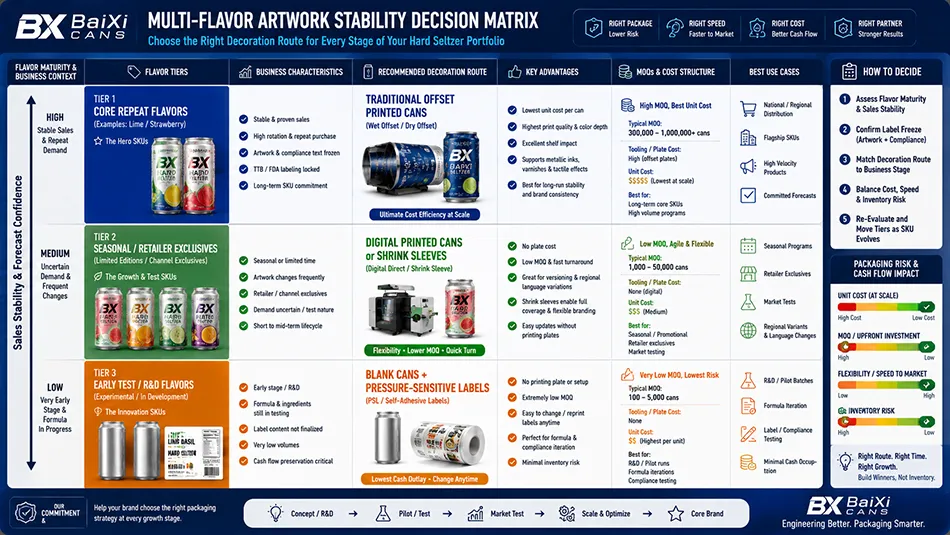
Decoration route is often the hardest sourcing choice for hard seltzer because flavor count changes faster than can body tooling. According to Blue Label's digital printed can specifications, published digital can examples include low-thousand minimums, pilot cans after proof approval and production after pilot approval. According to INX's metal color catalog information, color communication for beverage cans is stronger when teams evaluate color printed on metal rather than paper. These examples show why a seltzer buyer should compare inventory risk and color proofing before choosing the cheapest per-can route.
| Route | Best fit | Watch-outs |
|---|---|---|
| Blank cans plus labels | Early flavor tests, small runs, changing copy | Adhesion, moisture, application speed and barcode placement |
| Blank cans plus sleeves | High coverage graphics and multi-flavor pilots | Shrink distortion, seam placement, recycling acceptance and application quality |
| Digital printed cans | Low-thousand decorated runs, seasonal SKUs and fast proof cycles | Unit cost, available sizes, pilot approval and press capacity |
| Offset printed cans | Stable high-volume repeat flavors | MOQ, plates, lead time and obsolete inventory if copy changes |
Hard seltzer brands frequently launch with variety packs, seasonal flavors or retailer-specific editions. If the team does not know which flavors will repeat, flexible decoration can be the right answer even when the per-unit decoration cost is higher. Labels, sleeves or digital runs can protect cash and allow copy changes after market feedback. The buyer should still manage quality tightly: sleeve distortion, wet-fridge performance, barcode quiet zones and seam placement can create retail issues. Flexible does not mean low-control; it means the control points shift from printed inventory to application and proofing.
Offset printed cans can support a clean, professional package and better unit economics once the forecast is strong. The danger is committing too early. A flavor that looks promising in a small test may slow down after distribution expands. A label claim may change after legal review. A retailer may request a different barcode, pack count or warning statement. Once the brand has stable art, stable volume and repeat channel demand, offset can make sense. Before that point, the buyer should calculate the cost of obsolete inventory, not only the per-can price.
A practical rule is to rank flavors before choosing print route. Core flavors with confirmed velocity can move toward printed cans first. Seasonal or retailer-specific flavors can stay on flexible decoration until the repeat signal is strong. Variety-pack-only flavors deserve special caution because their demand depends on the pack architecture, not just consumer love for the individual flavor. This route-by-SKU discipline keeps the buyer from using one MOQ assumption across a portfolio that actually has different risk levels.
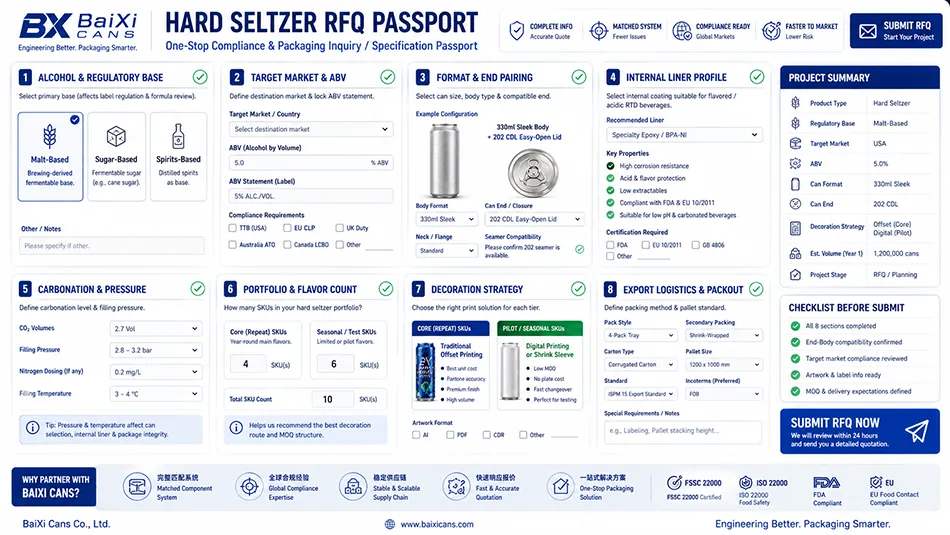
Hard seltzer sourcing works best when the buyer sends one complete project brief rather than separate messages for cans, lids, artwork and compliance. According to GS1 barcode placement guidance, cans and cylinders need barcode placement that protects scanning and quiet zones. According to Sherwin-Williams beverage can coating information, beverage can coating discussions can vary by product type, including acidic and flavored beverages. A serious RFQ should therefore include format, formula, label and route information together.
The RFQ should specify desired can size, target market, alcohol category, carbonation, flavor count, ABV, fill process, liner concerns, lid requirement, decoration route, artwork status, quantity by flavor, sample needs, required arrival date and export packing preference. It should ask whether the quote includes lids, what lid type is proposed, what MOQ applies per size and per design, when samples can be shipped and when production can run after final approval. If the order is a pilot, say so. If it is a repeat core SKU, say so. The right route changes when the buyer's real objective changes.
Baixi Cans can discuss slim, sleek and standard bodies, matching aluminum can lids, sample options, certificates, print route and export packing. Buyers can browse the product catalog, compare format families and send project details through the contact page. The strongest buyer file states which decisions are already fixed and which are still open. If the format is fixed but artwork is not, the sourcing strategy differs from a project where the artwork is fixed but the body is still being tested.
Hard seltzer can strategy is the point where label stability, flavor count and line proof meet.
Hard seltzer commonly uses slim or sleek cans in 250ml, 330ml, 355ml or 12oz-style ranges, with 473ml or 500ml used when the channel wants a larger single serve. The right size depends on market language, label space, filling-line fit and packout.
Use slim cans when lightness, portion control and premium functional cues are central. Use sleek cans when the brand wants a modern shape with more serving volume. In both cases, confirm the exact drawing, lid, seamer setup, barcode panel and filler history before artwork approval.
Printed cans are better for stable, repeatable SKUs with enough volume to justify decorated inventory. Sleeves or labels can be better for flavor tests, seasonal packs and changing compliance copy. The buyer should compare total risk: MOQ, lead time, application quality, obsolete inventory and color proofing.
Include alcohol category, target market, can size, lid needs, ABV, carbonation, formula notes, flavor count, artwork status, decoration route, quantity by design, filling plant, required date, samples, certificates and export packing. Ask whether lids are included and what MOQ applies per design.

