
Sorting: After recycling the used UBC, it is first necessary to sort it to remove impurities such as sand, liquid, other non-metallic materials (such as plastic, paper, etc.) and other non-aluminum metals such as iron. A combination of manual sorting and mechanical sorting can be used. For large-scale recycling, mechanical sorting is more efficient. For example, optical sorting equipment is used to automatically identify and sort objects according to their color, shape, material and other characteristics; or electromagnetic sorting equipment is used to absorb magnetic metals such as iron through a magnetic field to separate them from aluminum cans.
Crushing: The sorted used UBC is crushed into smaller fragments for subsequent processing. The crushing equipment needs to have efficient and stable performance, and can crush the cans into uniform fragments, while minimizing metal loss and deformation. Cleaning: The broken UBC fragments need to be cleaned to remove dirt, dust, residual beverages and other impurities on the surface. The cleaning process can be done by water washing or chemical cleaning to ensure that the surface of the fragments is clean and ready for subsequent paint stripping and smelting.

Thermal paint stripping: Put the cleaned UBC fragments into the paint stripping kiln to decompose and volatilize the paint layer under high temperature. This method has a good paint stripping effect, but it consumes a lot of energy and produces certain waste gas emissions, and needs to be equipped with corresponding waste gas treatment equipment.
Chemical paint stripping: Use chemical agents to react with the paint layer to dissolve or peel it off. The advantages of chemical paint stripping are fast paint stripping speed and good effect, but the use of chemical agents may cause certain pollution to the environment and requires strict treatment and control.
Laser paint stripping: Use the high energy of the laser to irradiate the paint layer, so that the paint layer is instantly vaporized or falls off. Laser paint stripping has the advantages of high precision, no pollution, and little damage to the metal matrix, but the equipment cost is high, and there are still certain limitations in large-scale application.
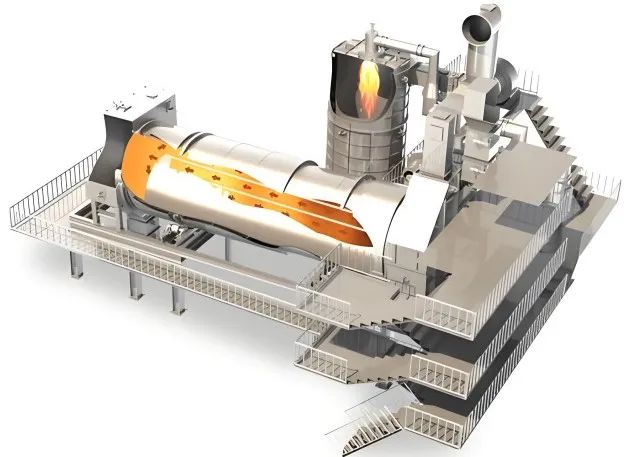
Traditional melting: Put the UBC fragments after depainting into the furnace, heat them to a certain temperature to melt them, then remove impurities, adjust the composition, and obtain recycled aluminum liquid. Commonly used melting furnaces include reverberatory furnaces, induction furnaces, double-chamber furnaces, multi-chamber furnaces, etc. The reverberatory furnace has a simple structure and low cost, but it consumes a lot of energy and has low melting efficiency; the induction furnace has a fast heating speed, precise temperature control, and less metal burning, but the equipment investment is high; the double-chamber furnace and the multi-chamber furnace can achieve continuous production, improve production efficiency and metal recovery rate.
Vacuum melting: Melting in a vacuum environment can effectively reduce the oxidation and burning of the metal and improve the quality of recycled aluminum. Vacuum melting can also remove gases and impurities in the metal, making the recycled aluminum purer. However, vacuum melting equipment is complex, difficult to operate, and expensive, and is suitable for occasions with high requirements for the quality of recycled aluminum.
Refining: During the smelting process, refining agents such as chlorine, nitrogen, argon, etc. are added to the recycled aluminum liquid to remove impurities such as hydrogen, oxygen, inclusions, etc., to improve the purity and quality of the recycled aluminum. The selection and use of refining agents need to be adjusted according to the composition and properties of the recycled aluminum liquid to achieve the best refining effect.
Purification: Filtration, precipitation, centrifugation and other methods are used to further remove fine impurities and particles in the recycled aluminum liquid to make the quality of the recycled aluminum more stable. For example, using a ceramic filter plate to filter the recycled aluminum liquid can remove most of the solid impurities; through precipitation and centrifugation, the impurities with higher density can be precipitated to the bottom or separated.
Casting molding: The refined and purified recycled aluminum liquid is poured into a mold, solidified and molded under natural cooling or forced cooling conditions to obtain aluminum ingots, aluminum bars, aluminum plates and other products. The casting process is simple and the cost is low, but the product structure and performance are relatively poor, which is suitable for occasions where the product performance requirements are not high.
Extrusion molding: After the recycled aluminum ingot is heated to a certain temperature, it is placed in the extruder. The pressure of the extrusion rod makes the aluminum ingot pass through the die hole of the mold to form an aluminum profile with a specific shape and size. The extruded product has a dense structure and excellent performance, which is suitable for manufacturing various structural parts and components.
Rolling molding: After the recycled aluminum ingot or aluminum slab is heated to a certain temperature, it is rolled by the rolling mill to reduce its thickness and increase its length to form aluminum plates, aluminum strips and other products. The rolled products have good surface quality and high dimensional accuracy, which are suitable for manufacturing various plates and strips.

