
Kombucha cans should be specified around fermentation control, acidity, coating compatibility, cold-chain assumptions and label route before the buyer chooses a size or decoration method.
A kombucha brand is not only buying a 250ml, 330ml or 355ml aluminum can. It is packaging a living or fermentation-derived beverage whose alcohol level, acid profile, carbonation and shelf-life plan can change the sourcing brief. The can needs to protect flavor and brand value without hiding compliance questions. Baixi Cans can help fermented beverage buyers discuss aluminum can sizes, lids, coating questions, printed or blank can routes and export packing as one packaging system.
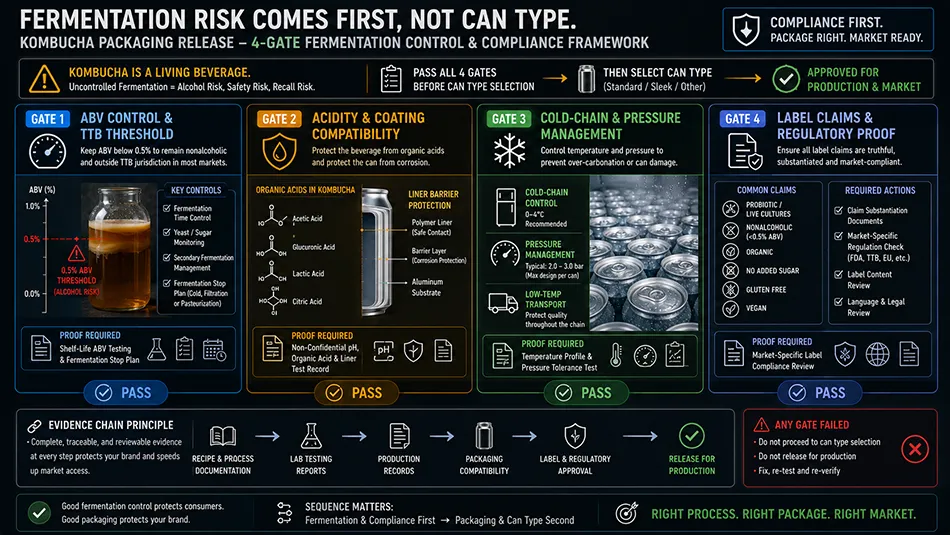
According to TTB kombucha guidance, if kombucha reaches 0.5% alcohol by volume or more at any time during production, when bottled or after bottling, it is an alcohol beverage subject to TTB regulations. TTB also says regulations apply when a product is below 0.5% when bottled but rises to 0.5% or more later because of continued fermentation. According to FDA acidified and low-acid canned foods guidance, shelf-stable acidified and low-acid canned foods in hermetically sealed containers have registration and process-filing requirements in defined cases. Those facts do not turn every kombucha can into the same regulatory project, but they do show why the packaging brief must begin with process evidence.
| Packaging question | Why kombucha is different | Buyer evidence to ask for |
|---|---|---|
| ABV over shelf life | Fermentation can continue after packaging if not controlled | Alcohol testing plan, process control and target-market review |
| Acidity and flavor | Organic acids, botanicals and live culture positioning can affect liner discussion | Formula profile, pH range, carbonation and shelf-life target |
| Cold chain | Some brands rely on refrigeration to protect quality and fermentation control | Storage temperature plan and distribution route |
| Label claims | Probiotic, raw, nonalcoholic and functional claims can trigger review | Market-specific label review before printing |
| Can release | The package must match formula, line and channel | Samples, filling trial, lid confirmation and finished-product checks |
For kombucha, the packaging team should not wait until the label proof to ask about alcohol control. The can order should be connected to a process plan: how fermentation is stopped or managed, how ABV is tested, what happens during distribution, and whether the product is marketed as nonalcoholic or alcoholic. A can supplier cannot replace regulatory counsel or process authority review, but the supplier should receive enough information to discuss liner, lid, pressure and labeling assumptions honestly. If the ABV strategy is uncertain, a large printed-can order can lock the brand into artwork that may need to change.
Kombucha brands often talk about pH, tartness, carbonation and live-culture identity separately, but the can experiences them together. A beverage with high acidity, natural flavors, botanicals or secondary fermentation risk should trigger a more careful coating and release conversation. The buyer should share pH range if available, carbonation target, fill temperature, tunnel or pasteurization assumptions, preservatives or stabilization method, and desired shelf life. Without those facts, can body selection becomes cosmetic. The package may look right and still be wrong for the product it has to protect, especially if pressure, flavor and storage temperature drift together during distribution.
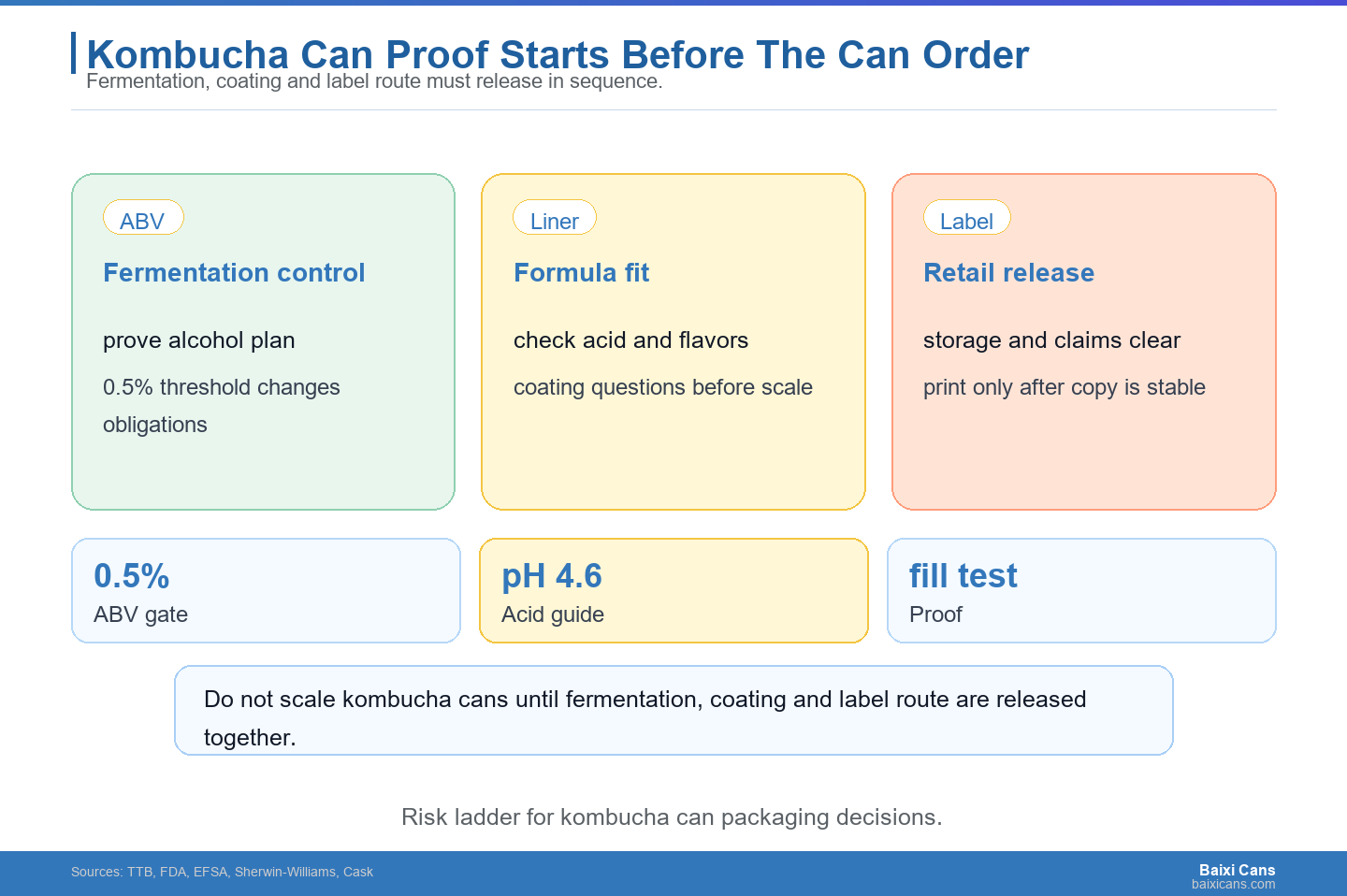
Kombucha can size should match the drinking occasion and the production system. According to Cask's can technical specifications, public references include 250ml, 330ml, 355ml, 473ml and 500ml can formats. According to Krones' Craftmate C brochure, example volumes include 250ml, 330ml, 474ml and 500ml. The point is not that one size is universally right. It is that kombucha buyers should connect serving size with line history, pressure, cold-chain volume, carton plan and label space.
A 250ml slim can can make sense for high-acidity, functional or premium kombucha because the smaller serving reduces trial price and makes the product feel concentrated. It may also fit wellness channels where shoppers expect smaller functional beverages. The risk is label space. Kombucha labels may need ingredients, nutrition, storage language, alcohol statements, deposit marks, live-culture claims, importer details and barcode space. If the can is narrow, the design team has less room to work. Baixi's printable slim 250ml aluminum cans are relevant when the brand wants a small premium format, but the buyer should still prove the full label panel before ordering.
330ml and 355ml cans can make kombucha feel closer to soda, sparkling water or craft beverage occasions. They often give more label room and may be easier for retailers to place in familiar chilled sets. A 330ml sleek body can create a premium silhouette, while a standard body can reduce line and packout friction. The buyer should decide whether the product is a daily soft drink alternative, a functional wellness serve or a craft fermented beverage. That positioning affects can body, lid, carton count, sleeve or print route and case pricing. The size is not just volume; it is a shelf language.
A 500ml kombucha can can work for sharing, value, food-service or event channels, but it should not be chosen only because larger packages look economical. More liquid means more filled weight, more pressure exposure if carbonation is high, more cold-chain volume and a larger label surface that must stay legally and visually clean. Baixi's 500ml aluminum can option is useful when the serving occasion truly supports a larger format. If the brand is still proving demand, a smaller can or blank-can route may protect cash better and keep the team from storing too much slow-moving chilled inventory.
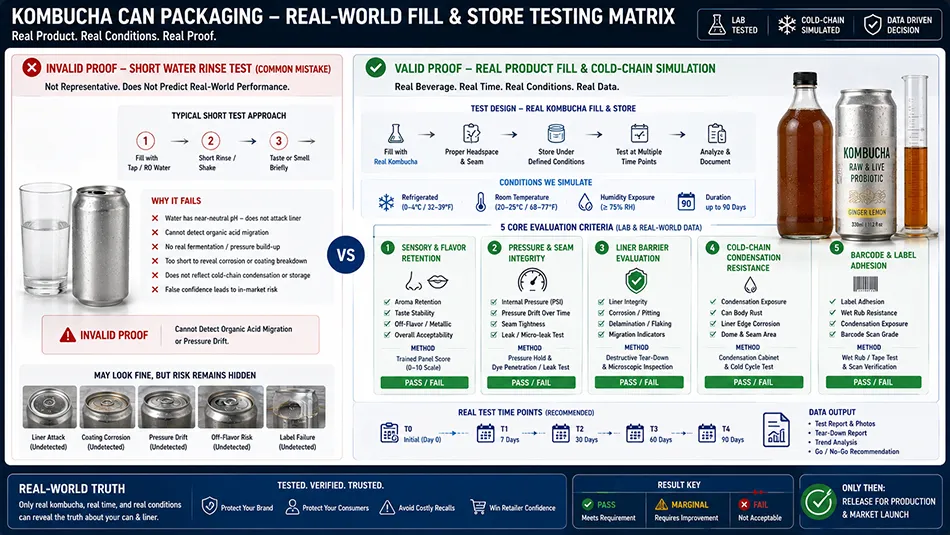
According to EFSA's food contact materials overview, food contact materials include containers and packaging intended to contact food and drinks, and chemicals can transfer into food and drink. According to Sherwin-Williams beverage can coating information, coating systems are discussed for beverage categories including energy drinks, citric-acid beverages and other demanding formulas. A kombucha buyer should therefore ask coating questions early, especially when the formula contains organic acids, fruit, botanicals, tea extracts or live-culture positioning.
The supplier does not need a secret recipe to have a useful coating conversation. The buyer can share a non-confidential profile: pH range, carbonation, sweetener type, tea base, fruit acid, alcohol target, fill temperature, shelf-life target and whether the product is refrigerated or ambient. That is enough to decide whether the project needs additional sample testing, more technical review or a different release path. A generic "BPA-free liner" statement may be important, but it is not enough by itself. The practical question is whether the proposed liner is suitable for this kombucha under this process and distribution plan.
A sample that is rinsed with water or filled for a short tasting cannot prove kombucha shelf performance. The buyer should run a small fill, store product under intended conditions, monitor taste, pressure, appearance, seam condition and any coating concern, and decide what evidence is needed before scale. If the product will travel through warm export routes, the test should not assume perfect refrigeration. If the product is sold chilled, the test should still consider what happens during loading, retail handling and consumer transport. Packaging proof should resemble the real route closely enough to reveal risk.
This is also where the buyer should decide what counts as a pass. A small flavor drift may be acceptable for a short local chilled run and unacceptable for an export program. A slight pressure increase may be manageable if the process has a release limit and a cold-chain control, but dangerous if the brand has no finished-product monitoring. Define the release evidence before testing starts: storage time, temperature, sensory target, pressure observation, seam checks, visual inspection and label condition. A test without a pass rule can create confidence without actually reducing risk.
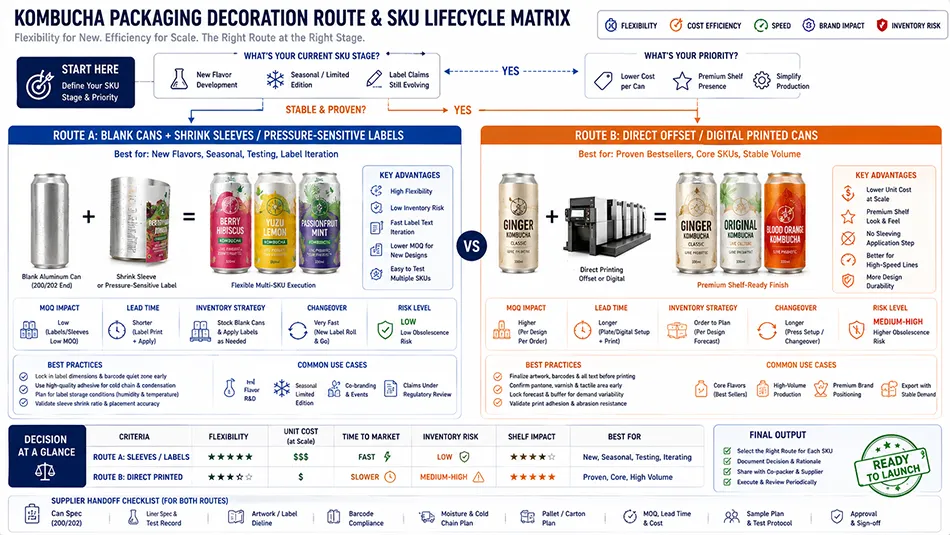
Kombucha brands often start with several flavors and evolving claims, so printing route matters. According to Blue Label's comparison of printed cans, sleeves and labels, printed cans, shrink sleeves and labels create different production steps and use cases. According to Karlville's sleeve and label comparison, shrink sleeves use heat to wrap printed film around a container, while pressure-sensitive labels use adhesive-backed labels applied to the surface. A kombucha brand should choose decoration by forecast certainty, cold-chain handling, flavor count and claim stability.
When a kombucha brand is still testing flavors, regional demand or claim language, blank cans with labels or sleeves can reduce obsolete printed inventory. The brand can change flavor text, storage instructions or design hierarchy without scrapping a truckload of printed cans. The trade-off is another application step and another quality variable: label adhesion, sleeve shrink, barcode readability, seam placement and moisture resistance. If the product sits in cold, wet retail environments, the decoration route should be tested under those conditions. Flexible decoration protects learning only if the application quality is controlled.
Printed cans can look cleaner and remove label-application work, but they reward stable artwork and more certain demand. Once the kombucha formula, ABV status, storage language, barcode, flavor set and label claims are settled, direct print or offset print can support a more polished retail package. The buyer should confirm print MOQ, color proof, pilot sample, lead time, dunnage, packing and whether lids ship with the bodies. If the brand expects frequent claim changes or seasonal flavor turns, a flexible route may still be better even if the unit decoration cost is higher.
For multi-flavor kombucha, the route can differ by SKU. A core ginger or original flavor may justify printed cans earlier because the formula and forecast are stable. A seasonal botanical flavor may stay on blank cans with sleeves because the claim language and demand window are less certain. Splitting the strategy is not inefficient when it protects cash and prevents obsolete inventory. The buyer should compare the route at the flavor level, not only at the brand level.
A useful kombucha can brief should include beverage type, target ABV, pH range if available, carbonation, fill process, cold-chain plan, target markets, size preference, lid needs, liner questions, artwork status, flavor count, MOQ range, sample needs and required arrival date. Buyers can review Baixi's product catalog, compare aluminum can formats, check compatible lids and use the contact page to send a project file.
The strongest sourcing sequence is process first, package second, print third. Confirm fermentation and alcohol-control assumptions, then choose liner, size and lid, then approve artwork route. That order protects the brand from buying beautiful cans that cannot carry the actual beverage responsibly.
Kombucha can packaging is ready for scale only when fermentation control, coating fit and label route have all been proven together.
Yes, kombucha can be packaged in aluminum cans when the formula, liner, carbonation, fermentation control, filling process and shelf-life plan are properly reviewed. Buyers should not rely on generic can suitability; they should discuss pH, ABV target, storage conditions and release testing with the supplier and filling plant.
There is no universal best size. 250ml suits premium trial and functional positioning, 330ml or 355ml suits everyday chilled beverage shelves, and 500ml suits larger value or sharing occasions. The best size also has to pass line, lid, label and cold-chain checks.
Yes. ABV affects label language, compliance review and process control. In the United States, kombucha that reaches 0.5% alcohol by volume or more at any relevant point can fall under TTB alcohol-beverage regulation, so ABV planning belongs before printed can approval.
Use blank cans with labels or sleeves when flavors, claims or demand are still changing. Use printed cans when the formula, label copy, storage language, forecast and artwork are stable enough to justify decorated inventory. Test cold-chain performance before scaling either route.

