
In today’s global beverage market, packaging is no longer just a container—it is a strategic part of brand success. For export-oriented beverage companies, the complexity of sourcing aluminum cans from multiple suppliers often leads to unexpected risks: delays, quality inconsistencies, and communication breakdowns.
This is why more beverage brands are shifting toward one-stop aluminum can manufacturing partners. Instead of coordinating separate vendors for can forming, printing, lids, and logistics, brands work with a single integrated supplier that manages the entire process from raw material sourcing to finished packaging delivery.
For export brands that rely on stable supply chains, regulatory compliance, and consistent global packaging standards, this integrated approach can dramatically reduce operational risks and improve long-term competitiveness.
In this article, we explore why one-stop aluminum can manufacturing matters, what it truly involves, and how brands can verify whether a supplier genuinely offers full vertical integration.
Many beverage brands initially build their packaging supply chains by working with multiple specialized suppliers. While this may appear flexible at first, it often creates hidden inefficiencies that accumulate over time.
When multiple suppliers participate in the packaging process, communication becomes significantly more complicated.
Each supplier may interpret technical specifications differently, leading to inconsistencies between can forming, coating, and printing stages. Even small discrepancies in dimensions or coating thickness can affect the final product quality.
Information often travels through multiple intermediaries before reaching the relevant production teams. This increases the likelihood of misunderstandings, delays, or outdated instructions.
Language barriers and time-zone differences add additional layers of complexity for international buyers. Miscommunication during design revisions or specification updates can lead to costly production errors.
Over time, these communication challenges increase operational overhead and slow down decision-making.
Another common challenge of decentralized supply chains is scheduling coordination.
Each supplier operates on its own production schedule, which may not align with the timelines of other partners in the supply chain. If one stage experiences delays, the entire production process can be disrupted.
Transportation between separate facilities introduces additional logistical risks. Materials may require multiple shipments between forming plants, printing facilities, and coating lines.
Export brands working under tight product launch schedules often find it difficult to synchronize all these moving parts. A single missed delivery window can push back market launches by weeks.
These timeline uncertainties can severely impact brand planning and inventory management.
Quality issues are inevitable in manufacturing, but decentralized supply chains often make them harder to resolve.
When defects occur, different suppliers may attribute responsibility to other parties involved in the process. For example, printing defects might be blamed on surface preparation, while coating issues might be attributed to material quality.
Without unified quality control oversight, identifying the root cause of defects becomes time-consuming and costly. Export shipments may be delayed while investigations take place.
In worst-case scenarios, brands may be forced to absorb the cost of rejected packaging batches because no supplier accepts full responsibility.
For export-oriented companies shipping thousands or millions of cans per order, these risks can translate into significant financial losses.

Integrated aluminum can manufacturing addresses many of these challenges by consolidating the entire production process under one management system.
One-stop manufacturers implement consistent technical standards across all production stages.
Unified engineering specifications ensure that can forming, coating, and printing processes are designed to work seamlessly together. This reduces compatibility issues between components.
Centralized quality control systems allow manufacturers to monitor each production step in real time. Defects can be detected earlier and corrected before they affect large batches.
Standardized testing procedures improve reliability and reduce variation between production runs. For export brands, this consistency is essential for maintaining brand reputation across global markets.
With a single technical framework governing the entire process, quality becomes easier to manage and predict.
Another major advantage of one-stop manufacturing is speed.
Product development cycles become shorter because design revisions can be implemented directly within the same production ecosystem. There is no need to coordinate with multiple vendors.
Production scheduling can be optimized internally, allowing different stages to align more efficiently. This reduces waiting time between processes.
Export brands benefit from faster prototyping and sampling cycles, enabling quicker market launches and seasonal promotions.
For fast-moving beverage markets, speed can be a decisive competitive advantage.
While one-stop manufacturing is not always the cheapest option per unit, it often results in lower total operational costs.
Brands spend less time managing supplier relationships, contracts, and logistics coordination. This reduces administrative workload.
Transportation costs between multiple production facilities are minimized or eliminated.
Supply chain risk is reduced, lowering the likelihood of costly delays or defective shipments.
For growing beverage brands with limited procurement teams, this simplified management structure is particularly valuable.
The term “one-stop manufacturing” is often used in marketing, but true integration requires several core capabilities.
The foundation of aluminum can production lies in forming technology.
Integrated manufacturers operate their own can-forming lines capable of producing multiple sizes and formats. This allows brands to select packaging tailored to their product positioning.
Popular formats such as the sleek 330ml soda can offer a premium visual appearance and are widely used in energy drinks and craft beverages.
Larger formats like the 500ml soda can are commonly chosen for value-oriented markets or high-consumption beverages.
Having these capabilities in-house ensures greater flexibility and faster production adjustments.
Packaging aesthetics are critical for shelf impact.
Advanced aluminum can manufacturers operate high-speed printing lines capable of producing detailed graphics and vibrant colors.
Integrated decoration processes ensure printing compatibility with coating and forming parameters, reducing the risk of surface defects.
Design adjustments can be implemented quickly without requiring coordination between separate suppliers.
This integrated workflow helps brands maintain consistent visual identity across global markets.
Quality control is a key component of one-stop manufacturing.
Every production batch can be tracked from raw aluminum materials to finished packaging products. This enables rapid traceability if issues occur.
Multiple inspection stages are implemented during forming, coating, and printing processes. Early detection prevents defective batches from reaching customers.
Digital quality monitoring systems allow manufacturers to record and analyze production data continuously.
For export brands shipping internationally, this level of traceability is critical for compliance and risk management.

While one-stop manufacturing benefits all companies, export-oriented brands experience the greatest advantages.
Different countries impose different packaging standards.
Integrated manufacturers often maintain expertise in international regulatory requirements related to food safety coatings, printing inks, and packaging materials.
This ensures that exported cans meet the standards of markets such as the United States, the European Union, and the Middle East.
Regulatory documentation and compliance certificates can be provided more efficiently when all processes are managed internally.
This simplifies international trade operations.
Export brands must maintain consistent packaging quality worldwide.
Integrated manufacturers ensure that every batch of cans follows identical production standards.
This consistency helps brands maintain a unified appearance across different markets.
Stable quality also strengthens brand credibility among distributors and retailers.
Consistency is a cornerstone of successful global brands.
Many emerging beverage brands operate with small operational teams.
Managing multiple packaging suppliers can overwhelm limited procurement resources.
One-stop manufacturers allow startups to focus on marketing, sales, and product development instead of supply chain coordination.
Simplified communication with a single partner speeds up decision-making and reduces operational stress.
For fast-growing brands, this streamlined model can significantly accelerate expansion.
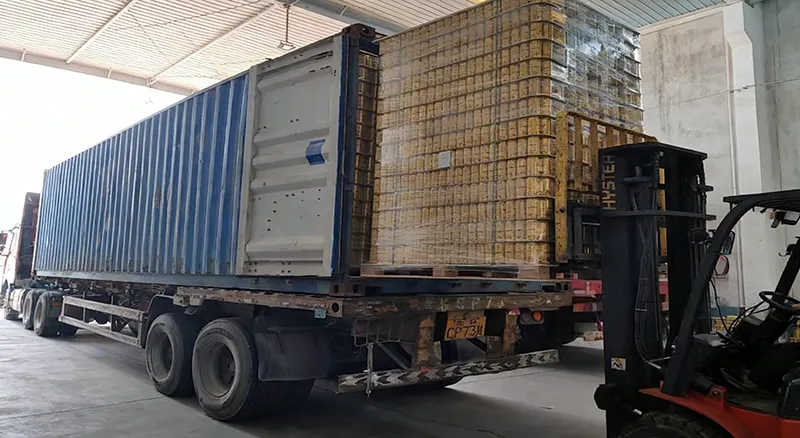
Because the term “one-stop aluminum can supplier” is widely used, brands must verify whether a manufacturer genuinely provides integrated production.
The first step is asking direct operational questions.
Brands should confirm whether the manufacturer owns and operates its own printing and decoration lines rather than outsourcing them.
Understanding which processes are handled internally helps determine the level of integration.
Suppliers that truly operate one-stop systems can explain their entire production flow clearly and transparently.
Transparency is a strong indicator of genuine capability.
Verification should go beyond marketing materials.
Buyers can request factory documentation, certifications, and production flow diagrams to understand how manufacturing stages are connected.
Video factory audits provide visual confirmation of equipment, production lines, and operational scale.
These steps help ensure the supplier possesses real industrial capabilities rather than relying on subcontractors.
This due diligence is particularly important for long-term partnerships.
Operational performance metrics reveal the true reliability of a supplier.
High on-time delivery rates indicate effective production scheduling and supply chain coordination.
Reorder rates reflect customer satisfaction and long-term trust in the supplier’s manufacturing capabilities.
For example, suppliers like Qingdao Baixi, which maintain a complete production ecosystem—from raw materials and can forming to internal coating and printing—demonstrate the strength of integrated manufacturing.
Their 100% on-time delivery rate and 33% customer reorder rate provide tangible evidence of the reliability and efficiency that one-stop systems can deliver.
In global beverage markets, packaging reliability is as important as product quality.
For export brands, decentralized supply chains often introduce hidden risks—from communication breakdowns and delayed shipments to quality disputes.
One-stop aluminum can manufacturing offers a strategic alternative. By integrating production stages under a single management system, brands gain:
Greater quality consistency
Faster production timelines
Simplified supplier coordination
Reduced operational risk
For companies aiming to build scalable international beverage brands, choosing an integrated packaging partner can become a long-term competitive advantage.
If you are exploring reliable aluminum can supply solutions, feel free to Contact Us to discuss your packaging requirements.
You can also learn more about how integrated solutions benefit beverage brands in our related article: Beyond Packaging: How One-Stop Aluminum Can Solutions Can Become Your Strategic Advantage?
One-stop manufacturing means a supplier manages the entire aluminum can production process—including forming, coating, printing, inspection, and delivery—within a single integrated production system.
Export brands often face complex logistics and regulatory requirements. Working with an integrated supplier reduces communication errors, shortens delivery timelines, and ensures consistent packaging quality across global markets.
You can ask whether they own their forming and printing lines, request factory documentation or video audits, and review operational metrics such as on-time delivery rates and customer reorder percentages.
Common formats include 330ml sleek cans, widely used for energy drinks and craft beverages, and 500ml standard cans, which are popular in many global markets for soft drinks and beer.

