
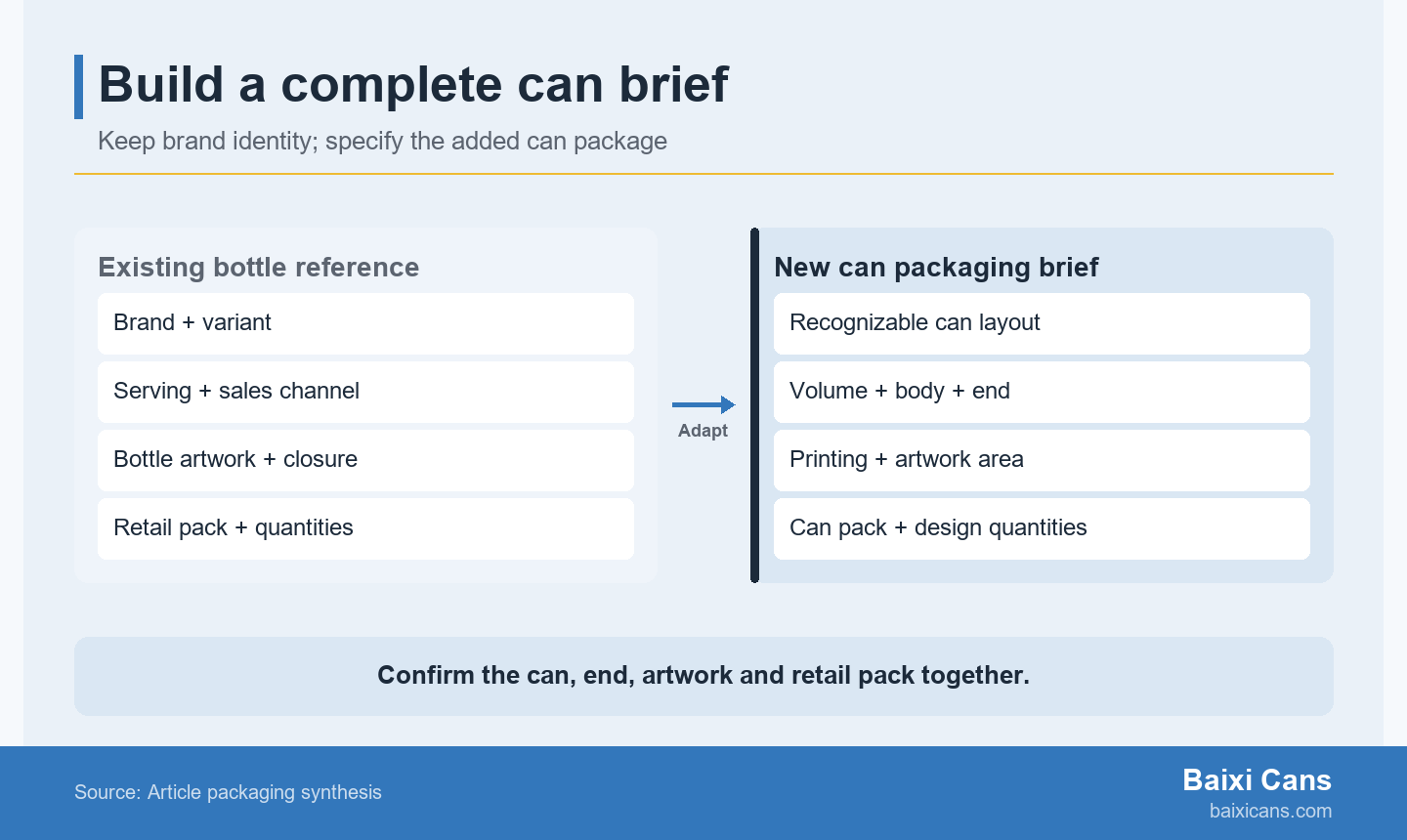
Adding cans to a glass-bottled beer range starts with a packaging brief: what the can should do for the existing brand, how much beer it should contain, how the brand will appear, and which can, end and retail pack belong together. Use the current bottle as a reference, then specify the added package on its own terms. This gives a packaging supplier useful questions to answer without assuming that a familiar beer, bottle label or pack count already defines the can.
Give the can a defined role in the beer range before choosing its appearance. The bottled product provides a reference for brand recognition, the beer variant and the way it is sold. The added can may target another sales channel or drinking occasion, while the bottle continues. That relationship should guide the new packaging request.
Write down where the can will be sold and how the customer will receive it. Is the proposed unit an individual chilled can, a take-home multipack or a package intended to be poured into a glass? Treat these as project choices, not claims that one material suits every occasion. If the customer or channel requirement is still being discussed, state the alternatives rather than quietly choosing a format for the designer.
Identify the brand features that the new package should preserve: the main name, beer variant, recognizable logo, color relationships and any elements used to distinguish products within the range. Also identify features that belong to the bottle itself, such as its silhouette, neck decoration or closure. A can can express the same identity without reproducing every physical feature.
The practical starting material is a clear bottle photograph, the current artwork files and a description of the existing retail pack. Explain which elements are references and which are fixed requirements. “Keep the variant easy to recognize beside the bottle” gives the design discussion a purpose; “make the can look exactly like this bottle” leaves the important packaging choices unanswered.
Choose the can volume for the intended serving and retail pack. The existing bottle size is useful context, but it is not automatically the correct can specification. Record the proposed volume per can, the number of cans in the sold unit and whether the can will also be sold individually. These are separate quantities in a packaging request.
A brand can keep the bottle’s serving volume to make the range easier to compare, or propose a different volume for a different occasion. Neither route establishes the best choice without the actual channel requirement. Where more than one option remains plausible, ask the supplier which specific formats can be considered and keep those alternatives visible in the brief.
For products identified in the GS1 system, the volume decision also affects trade identification. A GTIN is the Global Trade Item Number used to identify a traded product. Under the GS1 GTIN Management Standard, a change to the legally required declared net content printed on the pack requires a new GTIN. Keeping the same volume does not settle every identification question: assess the added product and its packaging hierarchy under the other applicable GS1 rules. This is a trade-identification standard, not a complete determination of destination-market labeling requirements.
If the proposed brief calls for that volume, Baixi’s 500ml beer-can option is a candidate to discuss. Request the current can-and-end specification for the project. A product listing can start the enquiry; it does not confirm the selected end, actual order minimum, delivery timing or suitability for the beer.
Carry the brand and beer-variant identity into a can-specific layout. Ask for the intended can’s artwork template and usable print area before extending a bottle label around the new shape. Decide which face should lead on the shelf, where the variant name belongs and how the design remains recognizable when viewed beside the bottle.
A bottle may divide information between front, back and neck labels. For the can, give the designer a clear hierarchy rather than asking for a proportional enlargement of those labels. Place the brand, variant and volume where they can be found; reserve room for the destination-market copy, barcode and agreed coding area. The relevant copy should be supplied or checked for that market rather than inferred from a decorative mockup.
Color needs a physical reference as well as an artwork file. INX’s metal color guidance explains that aluminum behaves differently from paper proofs and computer screens. Substrate reflectivity, ink opacity, varnish and press conditions affect the finished can’s appearance. A color that looks familiar on a paper bottle label therefore needs an agreed reference for the chosen can-printing route; a screen preview alone cannot establish the final result.
Describe whether the design calls for visible metallic areas or an opaque background, and ask how that intention can be represented in the proposed print process and sample. Keep the desired appearance distinct from an assumption about the supplier’s equipment. This is also where artwork versions and variant distinctions become useful procurement information rather than files passed on without explanation.
Leave usable barcode space in the layout. Quiet zones are the clear space beside a barcode. GS1’s barcode quality guidance identifies quiet zones, contrast, symbol size and positioning on cylindrical packaging as checks. Review the proposed printed layout with those needs visible, rather than shrinking the bottle’s barcode to fill whatever space remains. The guidance does not establish one universal placement or guarantee that a particular finished can will scan.
The added can package needs a specified body and end for the actual beer application. A bottle’s closure description does not provide that combination. In the enquiry, identify the intended beer, proposed body specification and opening preference, then ask which end is proposed with that body. Keep a preference for a certain opening separate from confirmed package suitability.
The public introduction to the Brewers Association’s beer-can compatibility guidance warns that not every beer or beer brand is compatible with every beer can and recommends assessing each beer brand intended for can packaging. The fact that a beer already performs well in its bottle is not evidence for every proposed can. Retain the actual product and package conditions in the technical discussion.
Give the packaging supplier and filling partner enough context to identify the relevant questions: the beer variant, intended filling process, proposed can and end, and expected storage or distribution conditions. Ask what package information or evaluation is needed. A catalog category such as “beer can” cannot replace that answer, and a design mockup does not establish flavor or shelf-life performance.
The result at this stage is a clear component request, not a machine-conversion plan. Record the proposed body and end identifiers together and retain any question that still affects the choice. Review Baixi’s can-end specifications and opening options as a starting point for that discussion. Ask for the current drawings for the proposed combination rather than selecting an end by a similar-looking name.
Choose the can’s retail pack while its individual appearance is being developed. A branded can can be visible on its own, partly covered by a carrier or displayed inside a carton. Name the pack the customer will buy, then identify the additional case or transport arrangement. A retail multipack and a shipping case serve different jobs, even when the same artwork appears on both.
The bottle carrier is a reference, not an automatic fit for cans. PakTech’s specification library provides separate can and bottle carrier specifications, with distinct entries for can styles. That separation is a reason to identify the actual proposed carrier, can profile and pack count. It does not establish that a particular carrier fits the project.
The outer pack can also influence how the brand is displayed. Graphic Packaging’s KeelClip description gives an example: a paperboard clip-style can multipack with product orientation during application. Its branding surface and the way cans face outward are linked to the pack’s application system. This is a named design example, not a claim that Baixi supplies that system or that all multipacks orient cans.
For the proposed route, request a pack arrangement showing can count, orientation where relevant, handling method and the visible brand area. Check whether the individual can must remain recognizable after removal and whether it is also sold separately. A carrier or carton that looks suitable in an image still needs to be considered with the actual can dimensions and packing method.
Separate packaging components in the request so that evidence can relate to the right item and source. Certification for an existing bottle or its supplier does not establish the credentials of the proposed can manufacturing site. Check the certificate holder, production address, scope and validity for the selected route. Baixi explains this document boundary in its manufacturing-site certification information.
Use the card below for each proposed can variant. Replace the prompts with the actual bottle reference and the intended can choice. In the last column, record the specific information the supplier needs to provide. If a choice is open, write the alternatives and the question that would settle it. An unknown end, artwork area or pack configuration should remain visible.
| Current bottle reference | Proposed added can | Information to request |
|---|---|---|
| Sales channel, drinking occasion and role in the range. | State the added can’s channel, occasion and relationship to the continuing bottle. | Which candidate formats can be considered for this use? |
| Volume per bottle and number in the retail pack. | Enter volume per can, cans per sold pack and whether individual sales are planned. | Confirm the proposed format; resolve open volume or pack alternatives. |
| Brand, variant, logo, color references and current artwork files. | Identify features to preserve, the can’s leading face and intended metallic or opaque areas. | Request the can artwork template, print area and suitable appearance reference. |
| Current label copy, barcode and coding location. | List destination copy, trade identification and space needed in the new layout. | Confirm the proposed artwork area and what supplied copy or code information is missing. |
| Beer identity, bottle and closure reference, current packaging process. | Specify the proposed can body and end for the actual beer application. | Request the current component drawings and applicable package-evaluation requirements. |
| Bottle carrier, carton, retail pack count and transport case. | Describe the new carrier or carton, can count, visible branding and packing method. | Request the actual can-pack arrangement and outstanding fit information. |
| Variants and existing artwork versions. | Enter total can quantity, quantity per design, printed or unprinted, destination and project stage. | Confirm the applicable quantity basis, decoration proposal and information needed for quotation. |
Use Baixi’s beverage-packaging guidance when a field needs more background. Keep the actual choices and outstanding questions in this card. The card connects the existing range to the new request; it does not replace product-specific confirmation from the proposed supplier and filling partner.
In this illustrative comparison, a six-pack of 330 ml bottles contains 1.98 L and a four-pack of 500 ml cans contains 2.00 L. Similar total volume does not make the packages equivalent. The numbers are hypothetical packaging choices, not a customer case or a recommendation to order either format.
On the card, the brand could keep its name and variant colors, enter the different can volume and pack count, and ask for the new artwork area, body/end combination and retail-pack arrangement. Nearly equal total beer does not carry over the bottle’s barcode, carrier fit or artwork dimensions. Those questions remain tied to the proposed can package.
If the retailer has not decided between individual-can sales and multipacks, keep that field open and ask for the packaging implications of both. If the can size is known but the end is not, send the known size and ask for the proposed combination. The useful outcome is an answer that resolves a named choice, rather than a generic confirmation that cans can be supplied.
A complete can enquiry includes the bottle reference and the new choices. Attach the current artwork as reference material, identify the beer variant and intended can use, and distinguish a desired appearance from a confirmed specification. Where two options remain open, identify the difference you need the supplier to address before quotation.
For Baixi, the custom-can minimum is 300,000 cans, with no below-minimum exception. Confirm how quantities are calculated per design or across a combined order; that basis is not established by the total alone. The figure is not a universal minimum for all unprinted cans or ends. Provide the quantity for each design so that the response concerns the actual range extension.
Send can and end specifications where known, total quantity and quantity per design, printed or unprinted requirements, design count, existing artwork status, destination, project stage and contact details. Baixi supplies packaging, without beverage formulation or filling services. Ask for the proposed packaging details and clarification of the remaining questions when you request a packaging review for the new can range.
No. The can can serve another channel or drinking occasion while the bottle continues, provided both packages have clearly defined roles. Decide how the new offer will be identified and sold alongside the existing range. The packaging request should describe that relationship; it does not need to assume a complete switch away from glass.
No. A successful bottled beer does not establish its performance in the proposed can, and the material alone cannot guarantee flavor or shelf life. Keep the actual beer, package and intended conditions connected in the technical enquiry. Agree the relevant evaluation with the packaging and filling partners rather than carrying over a bottled-product result as a can guarantee.
Yes, where the label or shrink-sleeve dimensions match the can. Unprinted means without printed decoration; it does not mean bare or uncoated aluminum. Confirm the relevant dimensions for the proposed label or sleeve, without adding an extra surface-treatment requirement. The can body and end still need to be specified for the beer application.
No. Compare complete specified packages and delivered quantities; the price of an empty can cannot establish the cost of a filled retail pack. Keep the can body, end, decoration, outer pack, filling arrangement and transport scope visible in the comparison. A material change alone does not prove a lower delivered cost for the proposed beer range.

