
Custom printed slim cans for energy drinks should be sourced as a matched package: slim body, compatible end, liner, artwork route and filling-line proof.
The slim energy drink can is attractive because it gives the category a concentrated, premium and functional look. It also creates a tighter sourcing problem. Narrower bodies can change line handling, barcode space, carrier fit and print layout. Energy drink formulas can be acidic and ingredient-rich, so coating discussion matters. Baixi Cans can help buyers compare slim aluminum cans, matching ends and print-route options before artwork approval locks the project in the wrong direction.
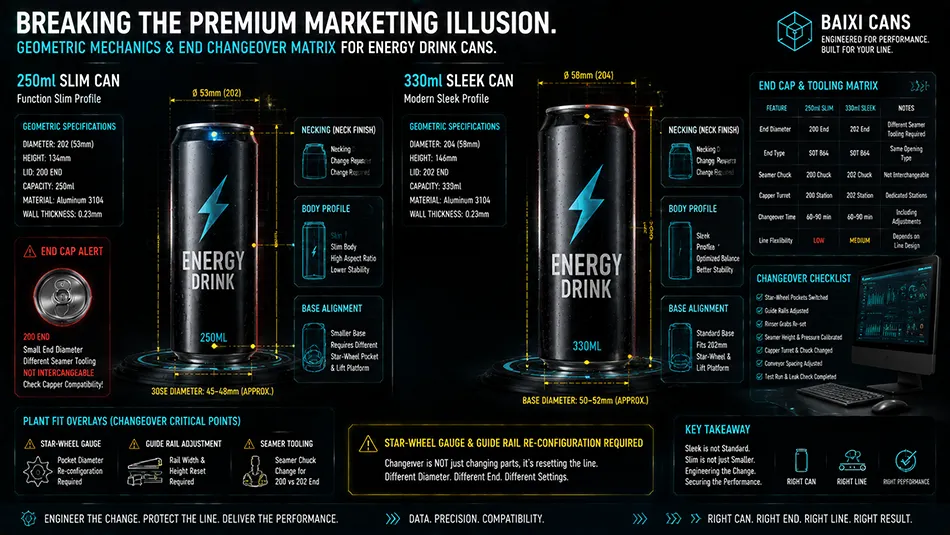
A slim energy drink can is not just a taller drawing. It changes the way the package feels, scans, fills and ships. According to Cask's can technical specifications, a 250ml reference is listed as 202 diameter, 134mm height and 200 end, while other mainstream references use different body and end assumptions. According to Krones, Craftmate C lists a standard 211/202 can format and optional 204/202 to 300/209 formats, which shows why exact body and end codes matter when a buyer says "slim." The supplier needs a specification, not only a style word.
A 250ml slim can can make sense for functional energy drinks, premium caffeine shots, low-calorie formulas and lifestyle products that want a controlled serving. The narrow profile can make the drink feel sharper and more deliberate than a standard soda can. It can also help multi-flavor energy ranges look clean on shelf. The sourcing risk is that the smaller can may use a different end and a different carrier system than the plant's mainstream line. Buyers considering printable slim 250ml aluminum cans should confirm the body drawing, end, line readiness and carton plan before artwork is locked.
Some energy drink brands want more liquid than a 250ml slim can but still want a narrower, premium silhouette. A 330ml sleek format can support that middle ground. It can feel more substantial while keeping a lifestyle or wellness signal. The buyer should still verify the exact diameter, height, end and filler compatibility. A sleek 330ml can is not the same as a standard 330ml can, and a plant that can run one may need tooling or setup changes for the other. The right question is not whether the plant can run 330ml; it is whether it can run this 330ml body.
Energy drink brands often want bold can graphics before demand is proven, which makes print-route selection critical. According to Blue Label's digitally printed can data, published minimums for digitally printed cans can run from 1,556 to 2,024 cans per design depending on size. According to Blue Label's printed can comparison, traditional offset printed cans often involve much larger quantities, often 150,000 cans or more. According to Canworks, digital can printing avoids plates and supports faster design flexibility. These examples show why MOQ should rise only when the SKU is ready for scale.
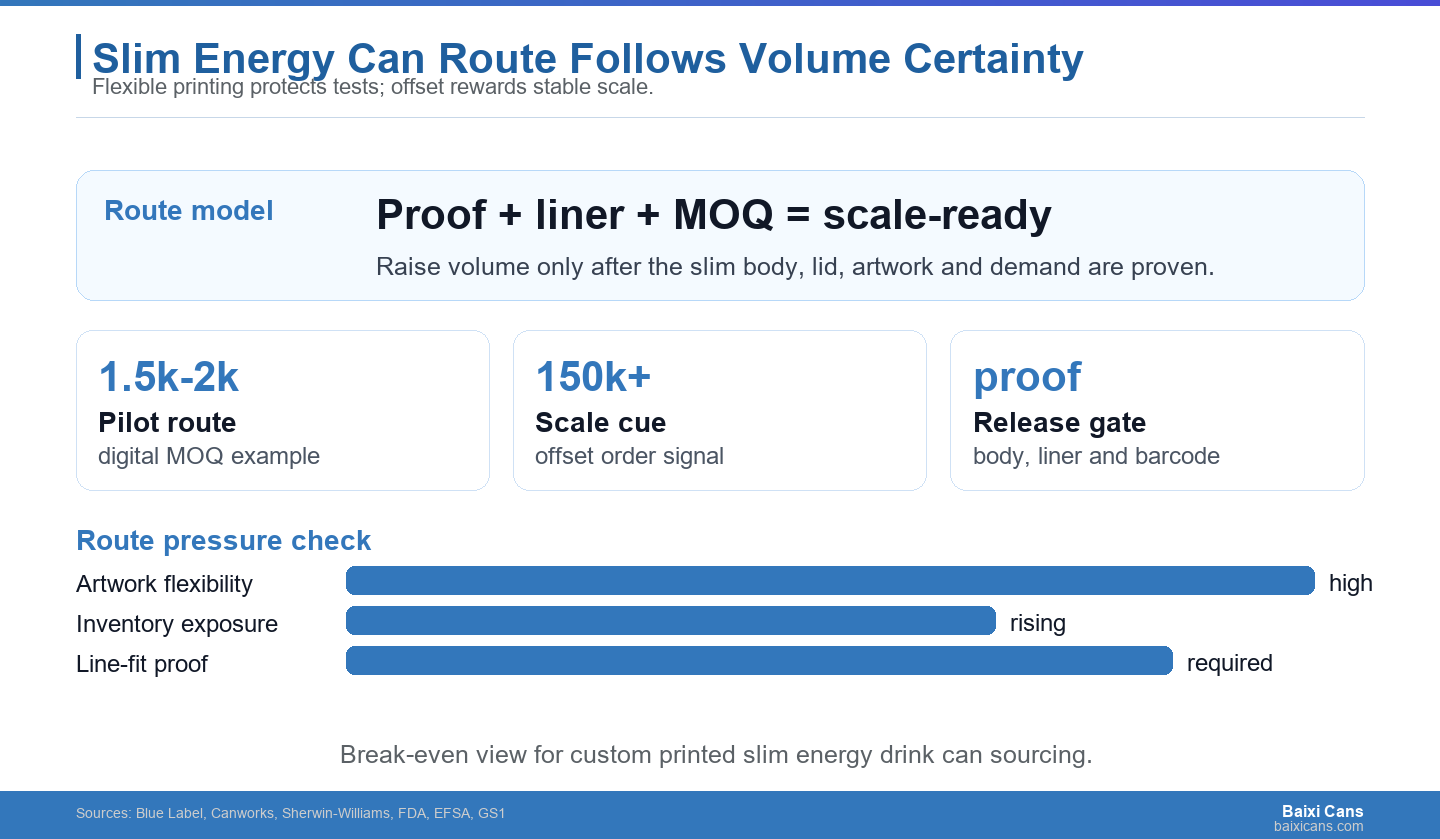
Energy drink launches often include several flavors, different caffeine levels, influencer drops, gym partnerships or regional retailer tests. A flexible printing route can protect the brand from overcommitting to the wrong flavor or label claim. It can also help the buyer test color, metallic effects and small text on the narrow body before scaling. The trade-off is that the unit cost may be higher and the proofing discipline still matters. Digital does not mean casual; it means the risk is shifted away from large inventory and into careful artwork, proof and production-slot control.
Offset printed slim cans can make sense when the brand has stable demand, a confirmed can body and a label file that is unlikely to change. The buyer should freeze the artwork revision, barcode, nutrition information, caffeine statement, importer details, color targets and market language before the production slot is confirmed. For export buyers, the calendar should include sample approval, mass production, lid availability, inland transport, sea freight, customs and filling-plant booking. A low per-can price does not help if the cans arrive late or carry outdated label information, so scale pricing should follow proof rather than ambition.
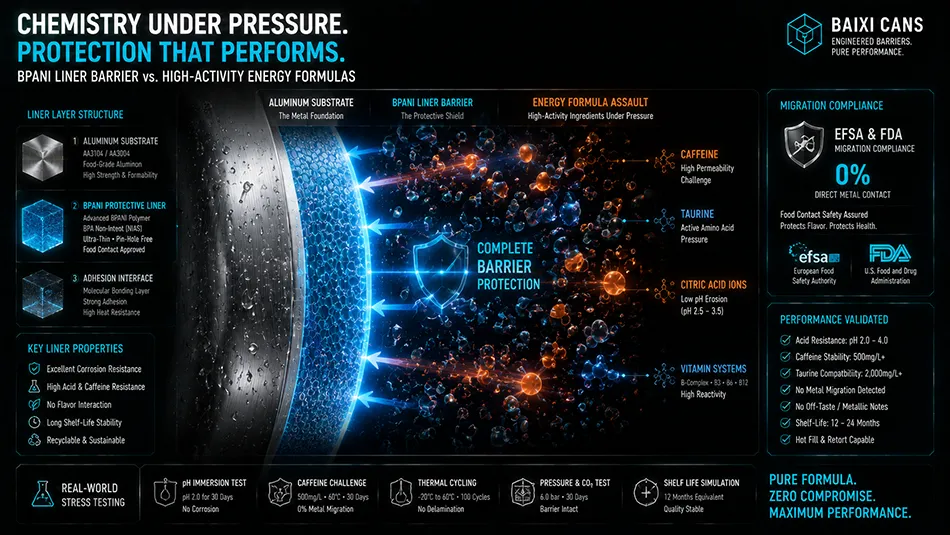
Energy drinks can be more chemically demanding than plain water because they may combine acids, caffeine, vitamins, botanicals, sweeteners and carbonation. According to Sherwin-Williams beverage coating information, beverage coating systems are listed for energy drinks and beverages with citric acid. According to FDA's BPA food-contact information, can coatings help protect food from direct contact with metal surfaces. According to EFSA's food-contact materials overview, food-contact materials include packaging intended to contact food and drinks, and chemical transfer is assessed through migration and toxicological data. The buyer should treat liner discussion as a core sourcing gate.
A supplier can quote more responsibly when the RFQ states product category, pH range if available, carbonation, fill temperature, hot-fill or tunnel process, target shelf life and special ingredients. Citrus acid, taurine, botanical extracts and vitamin systems may not all behave the same way in storage. The buyer does not need to reveal a confidential formula to every supplier, but the technical stress profile should be clear enough to discuss liner compatibility and sample testing. If the formula is still changing, the can order should not pretend the packaging risk is already fixed.
Many buyers ask for BPA-NI or BPANI liners because retailers and markets increasingly expect BPA non-intent packaging language. The supplier should confirm what coating description, document wording and regulatory assumptions are available for the target market. The buyer should also ask whether the same liner applies to both body and end. A can body with the right interior coating still creates risk if the lid specification is treated separately. This is why lid selection belongs in the same sourcing conversation as the slim can body, especially when the brand needs consistent documentation for export markets.
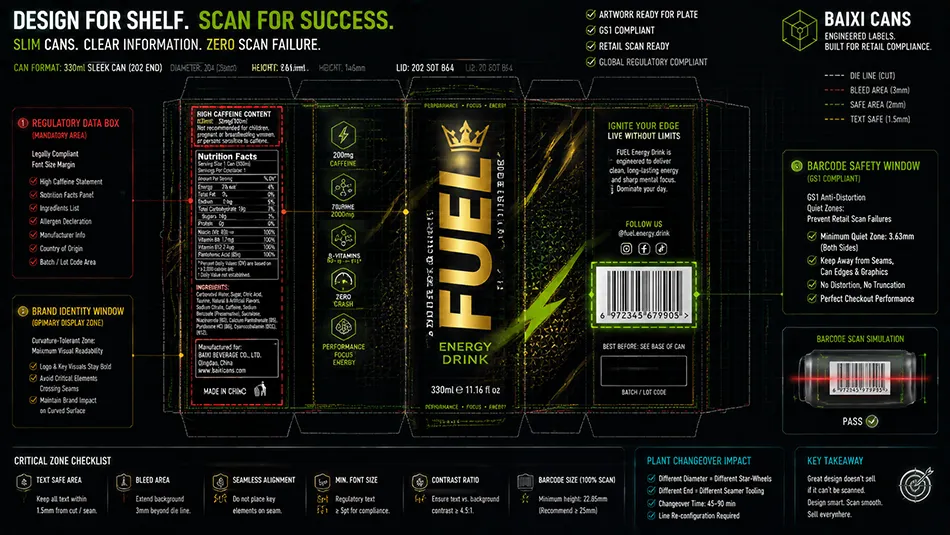
Narrow cans reward clean design. They punish clutter. According to GS1 barcode placement guidance, cans and cylinders should keep barcode placement and quiet zones scan-friendly. According to FDA food labeling guidance, many foods require nutrition labeling under applicable rules, which means energy drink artwork often has a lot of required information competing for space. The buyer should confirm net contents, nutrition facts, caffeine statement, ingredient list, manufacturer or importer details, barcode, recycling marks and market-specific warnings before the print proof is approved.
A slim energy drink can should usually carry a clear brand block, flavor name, functional cue, required label information and barcode without feeling crowded. If the design uses vertical type, gradients, metallic effects or dense illustrations, the proof should be reviewed at actual can scale. Small type that looks readable on a monitor can fail after curvature, gloss and production tolerance are added. Designers should leave enough calm space around the barcode and legal panel. The goal is a can that looks premium while still surviving retail scanning and compliance review.
Energy drink brands often use high-contrast colors, neon cues, metallic ink effects and dark backgrounds. Those choices can look different on aluminum than on a screen. Physical samples or pilot cans help buyers judge color, reflectivity, line weight, barcode contrast and small text before the order scales. The proof process should also define acceptable variation. A narrow can magnifies alignment and wrap issues because the reader sees the design around the body rather than on a flat label. A good proof prevents a design issue from becoming a warehouse issue.
A useful RFQ for custom printed slim energy drink cans should include can volume, body profile, end, lid requirement, liner preference, formula stress, filling process, artwork route, target market, barcode, sample needs, expected quantity, required arrival date, packing requirements and whether the buyer wants cans only or cans plus lids. Baixi Cans can discuss slim and sleek formats, matching ends, certificates, printable options and export packing. Buyers can browse Baixi's product range, review certificate information and send a specification through Baixi Cans' contact page.
The best slim energy drink can order does not start with the artwork file. It starts with the decision to make the artwork, formula, liner, lid and filling line prove each other before volume is committed.
Custom printed slim can suppliers should be compared by their ability to control the whole package, not only by a can-body quote. Ask whether the supplier can state the exact body drawing, compatible end, liner assumption, printing route, proofing workflow, sample timing, mass production timing, packing method and export documents. Ask whether lids are quoted together with the body and whether the supplier has experience coordinating narrow-body can projects. A supplier that can explain where the project still needs plant confirmation is usually more useful than a supplier that answers every question with a quick yes.
| Supplier response | Strong answer | Risky answer |
|---|---|---|
| Body and end | Exact drawing, end match and sample plan | Only a volume label such as 250ml slim |
| Liner and formula | Asks for pH, process and target market | Assumes every energy drink uses the same coating |
| Printing route | Explains MOQ, proofing and route trade-offs | Quotes a low price without artwork or demand context |
| Launch support | Separates production timing from freight and filling needs | Gives one optimistic date for the whole project |
A factory may be able to produce a slim aluminum can, but the launch still depends on artwork files, proof approval, line fit, lid availability, carton planning, freight and the brand's label requirements. Production capability answers whether the can can be made. Launch capability answers whether the buyer can receive the right cans in the right state at the filling plant on time. That distinction matters for energy drinks because launches are often tied to retailer resets, influencer campaigns, gym partnerships or seasonal promotions. The buyer should choose a supplier that can discuss the entire launch path, not only the manufacturing step.
The first order often gets the most attention, but the repeat order is where sourcing discipline shows. Before the first shipment leaves, the buyer should have the approved can drawing, lid specification, liner wording, artwork revision, barcode file, color target, packing method, carton information, certificate set and inspection notes saved in one place. That file helps the supplier repeat the package and helps the brand avoid accidental changes. For energy drinks with multiple flavors, the repeat-order file also becomes the base for new SKUs. The buyer should treat it as part of the product asset, not as administrative clutter.
The first mistake is choosing the slim body because it looks premium and only later asking whether the plant can run it. The second mistake is treating the lid as a commodity instead of confirming end compatibility, lid coating and packing. The third mistake is crowding the narrow label with claims, icons, caffeine text, barcode and nutrition data until the design loses the premium signal that made the slim can attractive. The fourth mistake is moving to large offset quantities before flavor demand and market language are stable. Each mistake is avoidable when the buyer treats the slim can as a system.
A better project rhythm is simple. Confirm the beverage and market, shortlist the slim or sleek body, check the end and liner, verify filling-line readiness, build the artwork around the actual drawing, proof the printed can, then scale the route according to demand certainty. This rhythm may feel slower at the start, but it is faster than solving format, coating or artwork mistakes after cans have already been produced. Baixi Cans can use the same rhythm to turn a slim energy drink idea into a quote-ready specification when buyers share the formula stress, target size and launch calendar.
The best slim energy drink can order starts by making the artwork, formula, liner, lid and filling line prove each other before volume is committed.
Many energy drink brands consider 250ml slim cans for controlled servings and premium positioning, while some choose sleek 330ml formats when they want more liquid with a narrow visual profile.
MOQ depends on the printing route, size and supplier. Digital and flexible decoration routes may support lower quantities than offset printed cans, while offset becomes stronger when demand is stable.
Energy drinks can contain acids, caffeine, vitamins, botanicals and carbonation. The liner protects the beverage from direct metal contact, so formula stress should be discussed before mass orders.
Check the exact can drawing, printable area, barcode placement, nutrition and caffeine statements, legal copy, color proof, lid match, line fit and target market requirements before approval.

