
Slim and sleek sparkling water cans are chosen for shelf signal, hand feel and portion control, but they still have to pass line, lid and coating checks.
Sparkling water is often sold through cues of clarity, lightness, flavor freshness and modern lifestyle. A narrower can can support those cues better than a standard body in many channels. The risk is that "slim" and "sleek" are sometimes used casually in branding conversations while plants and suppliers need exact drawings, ends and packout details. Baixi Cans helps beverage buyers turn format language into a practical slim, sleek or standard can comparison before artwork, samples and production slots are committed.
Sparkling water is not usually bought like cola or beer. It often competes on refreshment, wellness, flavor subtlety and occasion. A slim or sleek can can make the drink feel lighter in the hand and more differentiated on shelf. According to The Aluminum Association, aluminum cans are lightweight, stackable and strong, which supports broad retail and convenience use. According to the International Aluminium Institute, 71 percent of aluminium cans were recycled into new aluminium products globally in 2019, which helps brands connect sparkling water's modern image with a circular-material story.
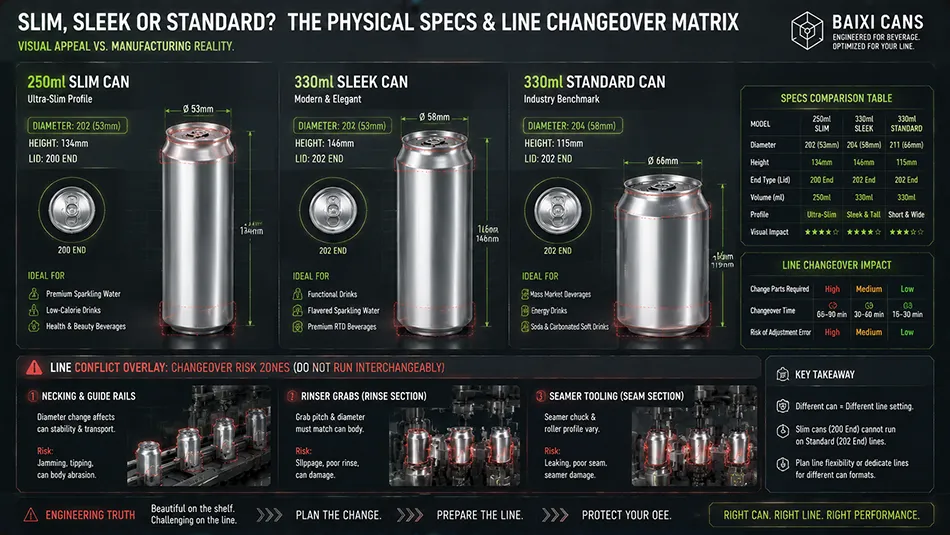
Slim cans are often attractive for 200ml, 250ml and similar sparkling water formats where the brand wants an elegant, controlled serve. They can work for flavored water, mixers, wellness drinks and trial packs because the shopper reads the package as lighter and more intentional. The narrower body also makes multipacks feel organized and premium. The sourcing trade-off is that slim bodies can require different line handling, different carriers and sometimes different end assumptions. A buyer should not approve a slim design until the supplier and filler have confirmed the exact format, not only the desired milliliters.
Sleek cans are useful when the brand wants a more refined silhouette without moving too far from mainstream beverage occasions. A 330ml sleek sparkling water can can feel more premium than a standard can while still giving a familiar serving size. For export and retail, that balance can matter because a format that is too unusual may create unnecessary line or shelf friction. Sleek formats are especially helpful for flavored sparkling water ranges because the can body gives enough panel area for flavor color, simple claims and barcode placement while still looking different from conventional soda.
Exact specifications matter. According to Cask's can specifications, a 250ml reference is listed as 202 diameter, 134mm height and 200 end, while a 330ml standard reference is listed as 211 diameter, 115mm height and 202 end. According to Krones, Craftmate C lists a standard 211/202 can format and optional 204/202 to 300/209 formats. These references show why a buyer should translate "slim" or "sleek" into diameter, height and end before the can is treated as a real production item.
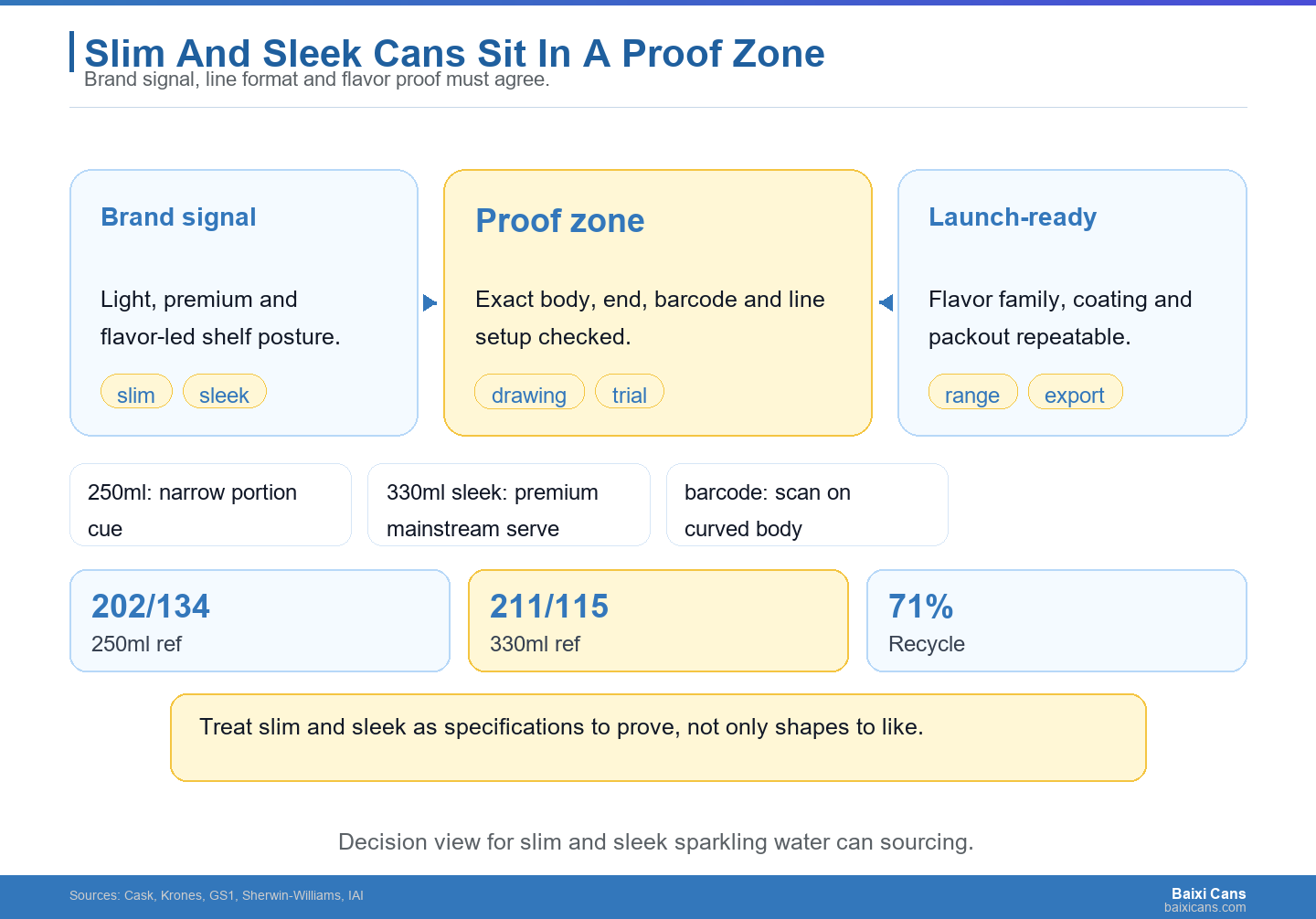
A narrower sparkling water can may need different depalletizer handling, rinser setup, filler guides, seamer settings, carrier fit, tray plan and carton dimensions. Even if the filling plant says it can run slim or sleek cans, the buyer should ask which exact body size and end it has run before. The plant's experience with one slim can does not guarantee readiness for every narrow format. Format confirmation should include empty can samples, end samples, trial quantity, packing details and finished-pack stability. This is where a stylish can becomes a production-ready can.
Slim and sleek cans give brands a clean look, but they leave less room for crowded label copy. According to GS1 barcode placement guidance, cans and cylinders should place barcodes in ways that preserve scanability and quiet zones. That can be harder when the can is narrow and the design uses large flavor names, vertical text or wraparound patterns. Sparkling water brands should check barcode size, contrast, legal copy, volume statement, recycling marks and importer information on the actual can profile. A clean design is only successful if it can also be scanned and sold.
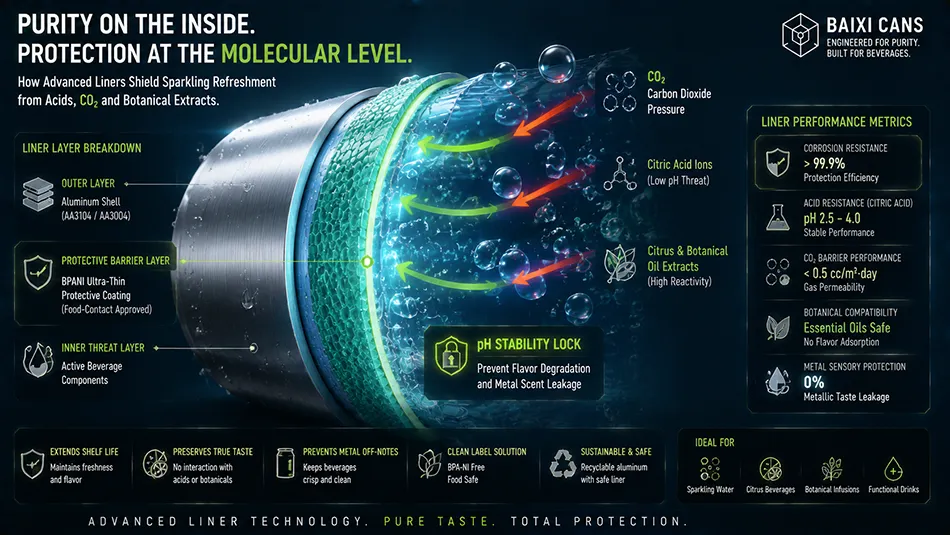
Sparkling water may look simple, but flavored products can carry citrus oils, minerals, acids, botanicals and carbonation that create package questions. According to Sherwin-Williams beverage coating information, beverage can coating systems are listed for carbonated soda, energy drinks and beverages with citric acid. According to FDA's BPA food-contact information, metal can coatings help protect food from direct contact with metal surfaces. A sparkling water buyer should give the supplier enough formula and process context to discuss coating suitability rather than assuming all water behaves the same.
Lemon, lime, grapefruit, yuzu, berry, tea, herb and botanical profiles can make sparkling water more distinctive, but they also create more questions for coating, sensory stability and shelf life. The buyer should provide pH, flavor system, carbonation level, filling temperature and target shelf life where available. If the product is lightly flavored and cold filled, the discussion may be straightforward. If it is highly acidic or contains unusual extracts, the buyer should request samples and filling feedback before mass printed cans are approved. Package selection should follow the formula, not only the brand mood board.
Sparkling water cans must tolerate internal pressure through filling, packing, storage and distribution. Temperature swings can increase pressure and expose weak assumptions in seaming or storage. Buyers should ask for pressure expectations, filling temperature, line conditions and storage guidance from the filling plant. The can supplier can discuss format and end compatibility, but the filled product performance depends on the whole system. For export programs, the buyer should pay attention to container temperature, warehouse exposure and carton strength because sparkling water often travels far before retail sale. The practical insight is that storage risk begins before the product reaches the retailer.
Many sparkling water brands launch in flavor families, which makes the decoration route especially important. According to Blue Label's digitally printed can data, published digital printed can minimums can be in the low thousands per design depending on size. According to Blue Label's printed can comparison, traditional offset printed cans often involve much larger minimums, often 150,000 cans or more. According to Canworks, digital printing offers flexibility because it avoids plates. These examples show why a multi-flavor sparkling water launch may need a different route than a single high-volume soda SKU.
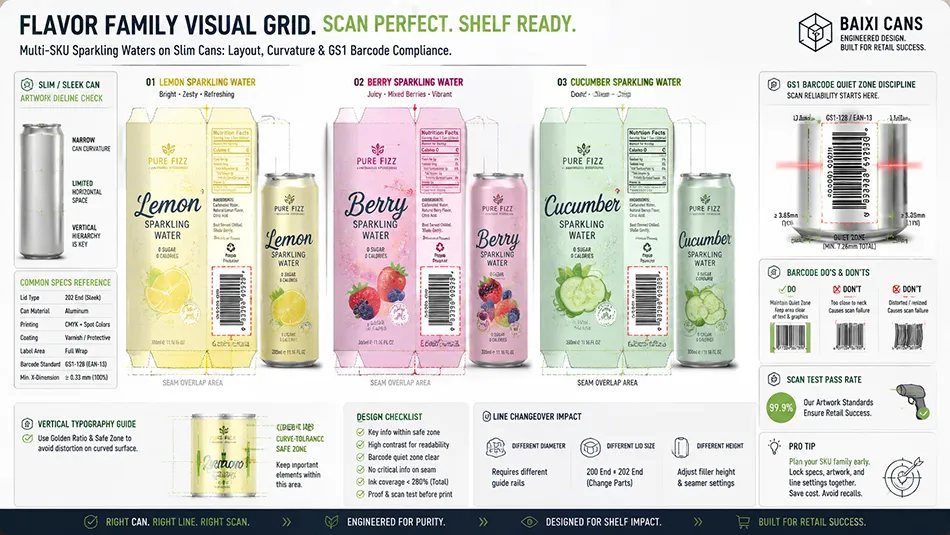
If the brand sells lemon, berry, cucumber, lime and tropical flavors, each can should feel related without becoming hard to distinguish. A repeatable design grid helps the buyer control barcode placement, required copy, color logic and proofing across SKUs. It also simplifies supplier communication because every flavor uses the same technical structure. The buyer should approve the master design system and then approve each flavor variation against the real can profile. That prevents a late discovery that one flavor color fails contrast or one long flavor name crowds the legal panel.
Baixi Cans can support sparkling water buyers with slim, sleek and standard can discussions, matching ends, sample planning, print-route comparison and export packing. Buyers can review printable options such as 250ml slim aluminum cans, browse Baixi's product range and contact the team through Baixi Cans' inquiry page with a brief that includes flavor family, target can size, filling plant and launch calendar. A strong brief also says whether the brand is testing one hero flavor or building a repeatable multi-flavor platform. That context helps the supplier separate pilot flexibility from repeat-order discipline.
Before ordering, confirm the can volume, body diameter, height, end, liner, print route, artwork proof, barcode, label copy, carrier, carton, pallet, sample plan, MOQ and lead time. Confirm whether lids are included, whether the filling plant has run the exact format and whether the target market has any deposit, recycling or importer text requirements. Ask the supplier to state which assumptions are fixed and which still need trial confirmation. A slim or sleek can can make sparkling water look more modern, but only a documented specification makes that look repeatable.
The choice between slim and sleek should follow the brand's drinking occasion. If the product is a small premium mixer, a functional sparkling water or a light refreshment sold in controlled portions, a slim can can reinforce the promise. If the product needs a more familiar serving volume while still looking more refined than standard soda, a sleek can may be easier to scale. The buyer should also consider the number of flavors. A large flavor range may benefit from a consistent body that retailers and co-packers can repeat. A one-off premium SKU may justify a more distinctive format if the line can handle it.
| Decision point | Slim can fit | Sleek can fit |
|---|---|---|
| Serving occasion | Controlled portion, mixer, premium trial | Mainstream serve with a refined profile |
| Range design | Minimal copy and vertical flavor cues | More panel room for flavor family systems |
| Operations | Needs exact narrow-body line proof | Still needs profile proof, but may be easier to merchandise |
Slim cans can stand out in coolers because they interrupt the standard can rhythm, but they can also require different shelf trays, carriers or multipack solutions. Sleek cans may be easier to integrate into mainstream beverage displays while still giving the brand a more modern look. For export buyers, shelf behavior also includes outer cartons, importer handling and retailer planograms. A format that looks excellent in a studio mockup may create friction if retailers cannot merchandise it efficiently. The buyer should ask how the finished pack will be sold, not only how the single can will look.
Sparkling water brands often depend on subtle flavor cues, so the can needs a design system that scales across several variants. A slim body may push the brand toward vertical layouts and restrained copy. A sleek body may allow more horizontal text and larger flavor panels. Either can work if the hierarchy is planned. The buyer should test the longest flavor name, the darkest flavor color and the most crowded legal panel before approving the range. If those difficult cases work, the simpler flavors usually work too. This is a better test than approving the prettiest hero flavor first.
Supplier responses should be compared by specification clarity, not only by price. A strong reply states the exact can body, end, liner assumption, printing route, MOQ, proofing process, sample timing, lead time, packing method and document availability. It also states which parts still need filling-line confirmation. A weak reply may quote a broad size and attractive price while leaving the buyer to discover later that the end, carrier, artwork area or sample schedule is different from expected. For slim and sleek sparkling water cans, ambiguity is expensive because small format differences can change the whole pack system.
Buyers should also ask whether the supplier can repeat the same body and end across future flavors. A sparkling water range usually grows by adding flavors, not by replacing the package system every time. If the first order creates a clean specification file, the second flavor can move faster. If the first order is built on vague format language, every flavor becomes a new negotiation. The best supplier response makes future repeat orders easier to imagine, and Baixi Cans can help buyers turn that response into a clearer RFQ when the format, lid and export plan are ready to quote.
A slim or sleek can can make sparkling water look more modern, but only a documented specification makes that look repeatable.
Slim cans can signal premium refreshment, portion control and modern wellness positioning. They also help small sparkling water serves look distinct from standard soda cans.
The terms describe narrower can families, but buyers should confirm exact diameter, height and end. In sourcing, the drawing matters more than the marketing word.
They may. Citrus, mineral, botanical or acidic flavor systems should be discussed with the can supplier and filling plant so liner and shelf-life assumptions are not guessed.
They are not necessarily hard to fill, but they require exact line confirmation. Depalletizing, filling, seaming, carrier fit and carton stability should be checked for the specific format.

