
Aluminum cans are not a health problem by default, but the real safety question is whether the can, liner, end, and beverage chemistry remain suitable through shelf life. The ATSDR aluminum health FAQ helps separate broad aluminum exposure concerns from the specific question a beverage buyer has to answer: is this food-contact package appropriate for this drink, market, and storage condition?
That distinction matters because most buyer risk does not come from the word aluminum. It comes from damaged cans, wrong liner choice, aggressive formulas, unclear BPA or BPANI evidence, or a release packet that covers the body but forgets the lid. EFSA bisphenol guidance and the EU's Regulation 2024/3190 make liner evidence more important for global projects, while can-defect guidance turns physical damage into a practical inspection decision.
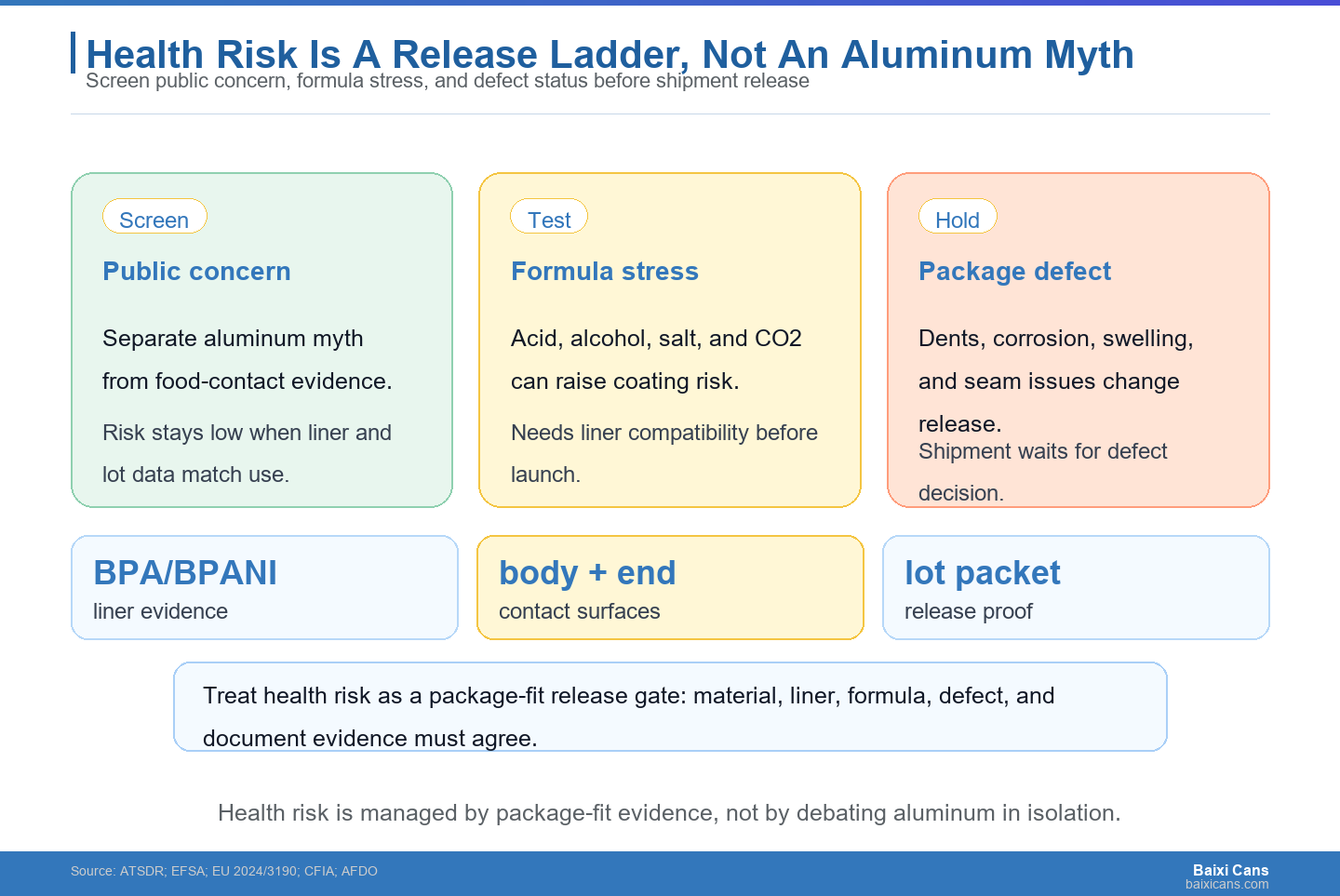
The useful answer is neither panic nor blanket reassurance. Buyers should split the question into exposure, food-contact surface, formula stress, and physical package condition.
A beverage can is safe or risky as a system; the body, liner, end, formula, and storage path have to be judged together.
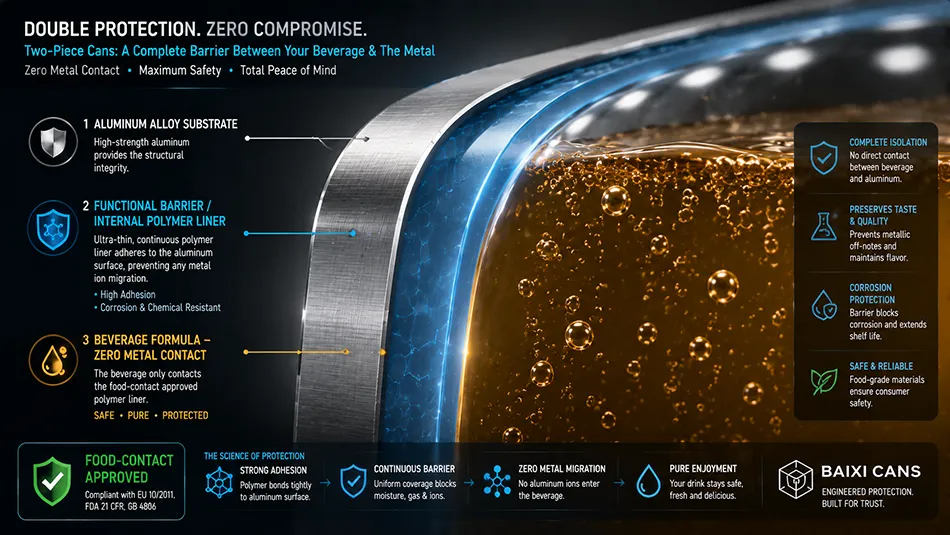
The health conversation often starts with aluminum as a metal, but the buyer decision is narrower. The ATSDR toxicological profile frames aluminum effects by exposure route, level, and form. That does not turn a lined beverage can into a health problem by itself; it tells buyers not to treat every aluminum mention as the same risk. A sealed beverage can is a food-contact package, so the relevant question becomes whether the drink contacts a suitable liner and whether the package remains intact.
In practice, the decision rule is simple: do not approve or reject a can because consumers ask an abstract aluminum question. Translate the concern into measurable evidence: food-contact declaration, coating system, body and end scope, intended beverage category, shelf-life target, and defect acceptance criteria. That gives customer service, QA, and purchasing the same language.
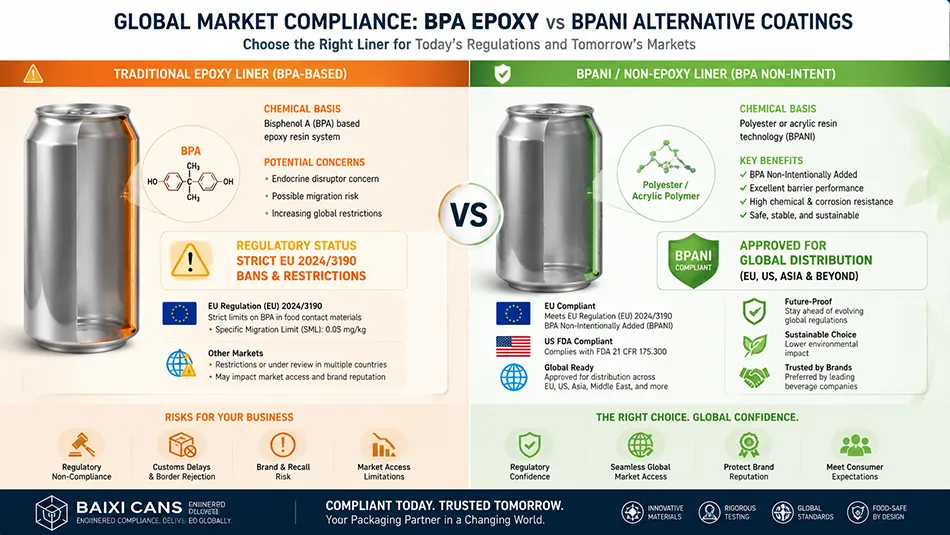
BPA and BPANI questions belong to the liner file. Food Packaging Forum explains can coatings as barrier systems that protect the food or drink from the package and the package from the product. That changes the buyer action: ask what coating is used, whether BPA is intentionally used, whether the declaration covers both body and end, and what market rule the evidence supports.
The EU's 2024 BPA regulation and bisphenol background material also show why old wording can be too narrow. A claim such as BPA free, BPANI, or non-epoxy is only useful when it has scope, test basis, and destination-market meaning. The hidden cost is not only compliance failure; it is a late artwork hold after printed cans and lids have already been scheduled.
A suitable can can still become a hold decision when dents, seam distortion, swelling, corrosion, or abuse compromise package integrity.
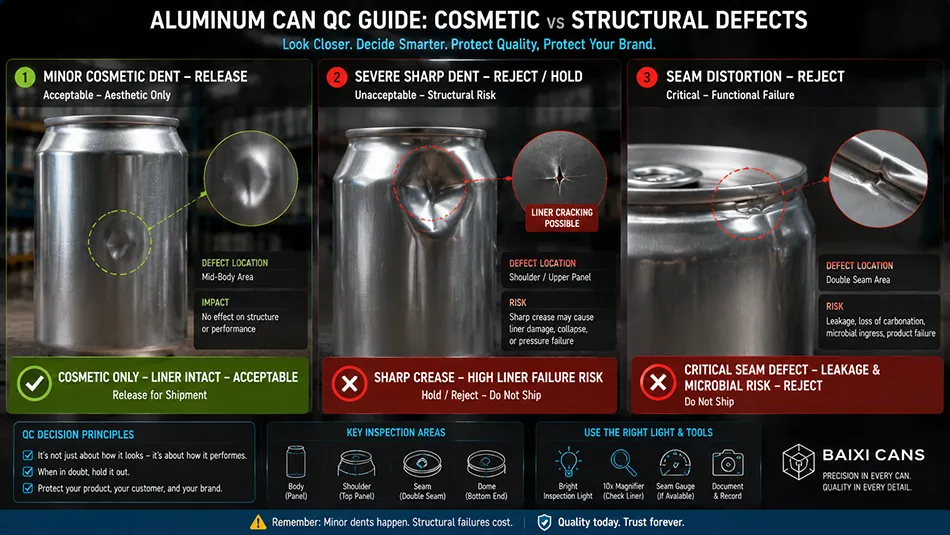
The CFIA metal can defect guidance treats physical defects as a food-safety and inspection issue because damage can affect seams, ends, and container integrity. That is why buyers should not answer a damaged-can complaint with a generic health statement. They should classify the defect, isolate the lot if needed, and decide whether the package can be released, reworked, or rejected.
The AFDO can-defect guide is useful because it converts vague words such as dented or bad seam into a more disciplined vocabulary. Based on our analysis, a buyer who defines 5 defect categories before shipment reduces decision time because warehouse staff, distributors, and QA can use the same hold criteria instead of arguing case by case.
Corrosion risk is often misread as proof that aluminum cans are unhealthy. The better mechanism is compatibility. Acidic drinks, chloride load, preservatives, carbonation, alcohol, dissolved oxygen, storage heat, and shelf-life expectations can stress a liner. If the internal coating is not matched to the beverage, exposed metal or flavor change can become a quality and integrity problem.
For energy drinks, juices, cocktails, and functional formulas, the package review should include pH, acid system, target shelf life, and market temperature. Baixi Cans should receive these details before the buyer locks artwork or lid style. A customer reviewing 250ml slim aluminum cans for an acidic drink should treat coating compatibility as part of the format choice, not as a later certificate request.
The screen below turns consumer safety concerns into a specification workflow that a buyer can actually send to a supplier.
The most useful buyer question is not whether aluminum cans are healthy. It is whether the drink is chemically ordinary or aggressive for the chosen liner. Soda, beer, energy drinks, sparkling wine, coffee, tea, and cocktails can present different acid, alcohol, preservative, and flavor-retention demands. A can that performs well for one beverage may not be the safest specification for another.
The decision rule: if the formula is acidic, alcoholic, functional, or expected to sit in warm distribution for months, request liner suitability evidence before artwork approval. That early check is cheaper than discovering after filling that the can needs a different coating, a different end, or a shorter shelf-life claim.
The Aluminum Association beverage can overview is useful for understanding the can as a lightweight engineered package, while the buyer's release packet has to be more specific: body, end, tab, liner, printing, packing, and shipment lot. A beautiful printed can still fails the health conversation if the end coating or lid documentation is missing.
For Baixi Cans projects, buyers should connect the can body with matching aluminum can lids in the same technical review. In practice, that means the purchase order should identify capacity, diameter, lid type, liner claim, destination market, carton method, and any retailer documentation before mass printing starts.
| Question | Evidence to request | Why it matters |
|---|---|---|
| Is the concern about aluminum exposure? | Health-context reference plus food-contact package explanation | Avoids confusing broad toxicology with lined-can use. |
| Does the liner fit the beverage? | Coating type, intended-use declaration, compatibility notes | Acid, alcohol, and storage heat change the risk profile. |
| Are body and end both covered? | Body liner file, end coating file, compound and lid scope | A body declaration does not prove the lid. |
| Is the can physically sound? | Defect criteria for dents, seam distortion, swelling, and corrosion | Damaged packages need a hold rule, not a marketing answer. |
| Can the release packet travel with the shipment? | Lot codes, destination market, certificates, inspection photos | Retailers and importers need traceability if a question appears. |
The table's decision rule is deliberately conservative: if the risk can be measured, put it in the RFQ; if it cannot be measured, avoid turning it into a broad health claim.
Baixi Cans should appear in this topic as a specification partner, not as a medical authority. The brand's role is to help buyers translate beverage requirements into can, lid, liner, and document choices.
A buyer comparing slim, sleek, and standard cans should start with the beverage and market. The Baixi aluminum cans collection gives the format conversation a natural home, but the RFQ should include pH, carbonation, alcohol if any, hot-fill or pasteurization exposure, shelf life, and destination market. Capacity alone is not enough evidence for a health-sensitive launch.
Based on our analysis, the strongest early filter is a 4-part fit check: formula stress, liner claim, lid compatibility, and destination documentation. If any of the 4 is unknown, the buyer should slow down before approving printed cans. The small delay protects the brand from a larger compliance or quality hold later.
Export buyers should ask Baixi Cans for a release packet that matches the destination, not just a general certificate. Useful evidence can include food-contact declarations, body-and-lid scope, coating claim, lot traceability, photos, packing list, and any required certificate page such as Baixi qualification materials when relevant to the buyer's approval process.
If your team is getting consumer questions about can safety, send Baixi Cans the formula profile, target market, can size, lid style, shelf life, and claim wording before final artwork. Then use the Baixi Cans contact page to request a specification review that answers the actual buyer question instead of repeating a generic safety statement.
This is the point where the topic becomes operational: the buyer turns technical uncertainty into the questions a supplier, filler, or compliance reviewer can answer.
According to the ATSDR aluminum FAQ, aluminum health interpretation depends on exposure context rather than the package word alone. According to EFSA, BPA concerns belong to dietary exposure and food-contact evidence. Those two references push the RFQ in the same direction: define the drink, contact layer, market, and evidence scope before answering consumer safety questions.
According to the Food Packaging Forum coating background, coatings are functional barriers, so the buyer should ask which liner is intended for the beverage. According to EU Regulation 2024/3190, BPA-related compliance can be market-specific. This means a global buyer should not accept one broad statement when the real shipment needs body, end, and destination-market coverage.
According to the CFIA metal can defect guidance, metal can defects can affect food-control decisions. According to the AFDO defect guide, seam and component terminology matters because the failure mode changes the action. The practical rule is to define dents, seam distortion, swelling, leakage, and corrosion before the first inbound shipment.
Data from the buyer's own receiving history should be added beside those outside references: number of damaged cartons per pallet, days in warm storage, and complaint rate after distribution. Calculated from a simple 1,000-can trial, even 10 questionable cans equals a 1 percent hold sample that should trigger a supplier conversation before scale-up.
For deeper specification work, review Baixi's aluminum can formats, pair them with compatible aluminum can lids, and use Baixi service information to align sampling, printing, and shipment evidence before launch.
Before requesting a quote, send Baixi Cans the beverage category, pH range, carbonation level, alcohol if any, target market, shelf life, preferred can size, lid style, and any BPA or BPANI wording your customer requires. That gives the supplier enough context to discuss can and lid fit instead of answering the health question in slogans.
No, aluminum cans are not automatically toxic to drink from when the package is food-contact suitable, intact, and matched to the beverage. The practical risk review should focus on liner evidence, product chemistry, package condition, and market documentation.
Some markets and suppliers have moved toward BPA non-intent or alternative coating systems, but the wording must be verified. Buyers should ask whether the claim covers the body and end and which destination-market rule it supports.
A minor cosmetic dent is different from seam damage, swelling, leakage, or corrosion. Use a defect classification rule so warehouse and QA teams know when to release, hold, or reject a can.
Yes, acidic and functional beverages need a stronger liner compatibility review than ordinary water or simple soda. pH, acid type, preservatives, carbonation, temperature, and shelf life can all change the right specification.
Send the formula category, pH, carbonation, alcohol, shelf life, destination market, can size, lid type, process conditions, and required claim wording. That information lets the supplier discuss the package system rather than giving a generic answer.

