
How to ship soda cans is less a carton-selection question than a handover-control question. A unit load is a palletized group of cases handled as one shipment unit; it remains dependable only when the packer, carrier and receiver can see the same geometry, condition and identity. Build the load for the route, then preserve receiving evidence that lets the next party compare what arrived with what was released.
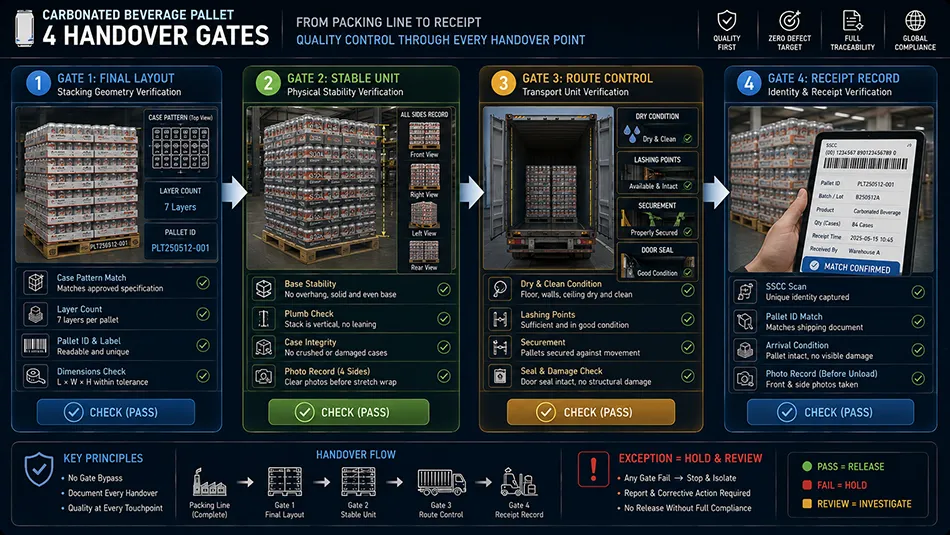
A soda-can shipment should be planned as one unit load across packing, securing, transport and receipt. That sequence matters because a pallet can leave the packing area looking orderly while its layer pattern, restraints and identification no longer match the conditions at the receiver. Put one owner against each handover before materials are selected, so a change in the warehouse does not become an undocumented exception at receipt.
Use four gates to turn that principle into a release decision. None is a universal pallet recipe; they are the records and checks that make a route-specific plan easier to review.
| Handover gate | What can fail | Evidence before pickup | What the receiver can verify |
|---|---|---|---|
| 1. Final layout | Cases or layer pattern differ from the approved plan. | Layout drawing, case count and pallet ID. | The pallet matches the released geometry. |
| 2. Stable unit | Wrap or straps hide an unstable base. | All-side pallet photographs and restraint record. | The unit was stable before it was secured. |
| 3. Route control | Vehicle or container conditions do not suit the load plan. | Transport-unit check and carrier instructions. | Securing and condition checks were assigned. |
| 4. Receipt record | A damaged or shifted pallet cannot be tied to dispatch evidence. | Shipment record linked to the pallet identity. | Arrival condition can be compared before unloading. |
Start by defining the product format, case orientation, layers, pallet base, expected transfers and final transport unit. Add the receiving rule at the same time: who photographs a shift, who is notified and when normal unloading stops. This prevents a common information gap in which the warehouse controls the build, the carrier controls the journey and the receiver inherits an undocumented exception.
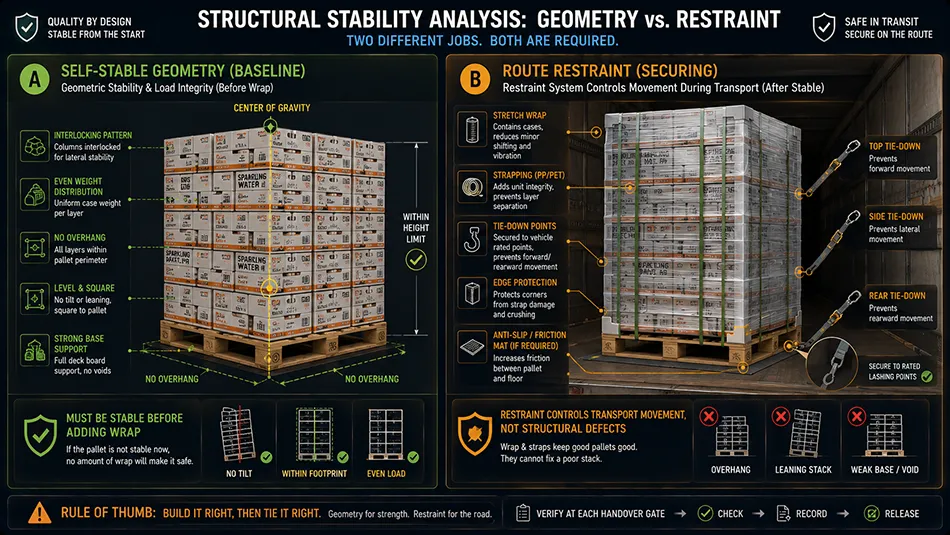
A pallet must be built as one stable handling unit before route-specific restraint is selected. In practical terms, the team first confirms that the documented arrangement of cases and layers—the packout—has a stable base and a repeatable top profile. Only then can it decide what movement still needs to be controlled during forklift transfers, road travel or container handling.
Format detail belongs in that first decision. A slimmer body, a changed case pattern or a different layer count can alter the pallet footprint even when the beverage and destination remain the same. When a slim format is in scope, review the 250 ml slim can format alongside the final case drawing rather than treating the can body as separate from the shipping unit. Baixi Cans can be a useful product reference at this stage, while the shipper still owns the final packout and carrier release decision.
A stable pallet begins with repeatable geometry and a sound base before any restraint is applied. The University of Florida's guidance on unitization and pallet stabilization explains why a load handled through several transfers benefits from being treated as one stable unit. Record the case orientation, layer count, pallet condition and any overhang rule in a drawing or photo standard that the build team can actually use.
Do not use a sample pallet as a substitute for a production record. A sample can prove that one arrangement is physically possible; it does not prove that every final pallet follows that arrangement. The practical check is simple: compare a finished production pallet with the current drawing before pickup, not with a memory of the approval sample. If the case, layer count or pallet base has changed, issue a new version and connect it to the shipment record.
Route restraint should control movement of an already stable unit and suit the transport unit's securing arrangement. The UK's Health and Safety Executive load-security guidance makes the same distinction: the load should be stable before it is restrained. That is why a visually tight wrap is not enough evidence on its own; it does not reveal whether the cases, base and planned handling path were compatible.
Ask the carrier or logistics team what securing points and instructions apply to the actual vehicle or container. Then record the chosen method and photograph the completed restraint before doors close. Avoid a universal strap count or wrap rule in a purchase order; equipment, route, transfers and carrier instructions determine the appropriate method. The useful release question is whether the recorded restraint controls movement for this journey, not whether the pallet looks heavily packaged.
Container safety begins where goods are packed, so the final load plan must include the transport unit and its securing conditions. A cargo transport unit is the freight container or similar transport unit that carries packed cargo; it must be part of the checklist, not an afterthought after the pallet is complete. The IMO's Cargo Transport Units Code covers loading, securing, handling and receiving across that chain. The World Shipping Council's container-integrity guidance also notes that poor packing can contribute to cargo collapses and that safe container transport begins at the packing source.
Before loading, check the transport unit for conditions that affect the agreed shipment: cleanliness, water intrusion, damage, obstructions, usable securing points and the planned loading sequence. Match those observations to the pallet plan, especially where a cross-dock or mixed handling path adds transfers. The plan should state who can stop loading if a condition is unacceptable and what record proves that the issue was corrected. For a larger body format, compare the 500 ml custom can format with the final case and load drawing before that release.
For covered U.S. motor or rail food transport, sanitary responsibilities are assigned among shippers, loaders, carriers and receivers. The FDA's sanitary transportation rule summary sets out that role-based scope for covered operations. It is a boundary, not a claim that every soda shipment worldwide requires the same controls. Confirm the applicable product specification, contractual allocation and destination rules before adding any temperature, sanitation or documentation condition to the load plan.

An SSCC can uniquely identify a logistics unit such as a pallet for tracking and traceability. In plain terms, the Serial Shipping Container Code is a unique serial number for one logistics unit. GS1 UK's logistics-label guidance explains how an SSCC identifies a logistics unit, giving the shipment a reference that can appear on both dispatch and receiving records.
A pallet ID becomes useful receiving evidence only when it is linked to the packout, product lot and dispatch-condition record. The GS1 General Specifications describe the SSCC as an identifier for an individual logistics unit; the commercial value comes from connecting that identifier to the evidence that describes the specific unit. A receiver should be able to scan or read one label and find the final packout, product lot, pallet photographs, restraint record and agreed receiving instructions.
That joined record is the most useful form of pallet identity. It turns a unit load from a stack of cases into an inspectable object: the pallet identity points to the packout record, and the packout record gives meaning to the receiving evidence. Include can-end information where it affects the final configuration; for example, confirm the aluminum can lid specification in the same record set rather than identifying only the can body. Keep the record accessible to the receiving team before the truck arrives, not only in a production folder.
A receiver should inspect and document a shifted load before normal unloading or restraint removal proceeds. The HSE's loading guidance calls for loads to be checked before unloading for movement during transit. The safe method and notification route still belong to the site and carrier rules, but the evidence sequence is clear: photograph the condition, identify the pallet, compare it with the dispatch record and agree the controlled next move.
Define this inspection point before shipment. If a receiver cuts wrap, removes restraints or reallocates cases before documenting a shift, the evidence needed to distinguish an in-transit movement from a packout error may be lost. A controlled inspection does not mean the receiver must reject every exception. It means the team preserves the condition first, then decides whether the pallet can be safely unloaded, rebuilt, isolated or released under the parties' agreed process.
In the illustrative launch scenario, a conditional release can be reasonable when identified representative pallets prove the final packout matches the shipment record. An illustrative beverage brand is sending its first 24-pallet soda launch through a cross-dock to a regional distributor. Its approved sample used a standard can case, while the final order uses a slim-can case pattern with a different pallet layer count. Pickup is scheduled, but the receiver has sample photos rather than a final packout drawing.
Each finished pallet has a label, yet the dispatch record does not show the final layer pattern. The cross-dock adds another forklift transfer before receipt, so the sample approval cannot establish that the production unit-load geometry is correct. The gap is specific: the team has a pallet identity, but not the evidence that links that identity to the actual final stack.
The shipper pauses pickup for 2 identified representative pallets, compares their final stacks with a signed drawing and issues the confirmed layout record for the remaining 22 pallets. A pallet that does not match the confirmed pattern is rebuilt; the record is updated and the completed restraint is photographed. This avoids both blind release and an all-pallet stoppage when the evidence supports a narrower correction.
Release follows only when the pallet IDs, final layer pattern and dispatch images match the receiver's handover packet. This is an illustrative decision path, not a universal case count, pallet-height rule or carrier acceptance standard. The parties must set their own safe inspection method and acceptance rule for the product, route and equipment involved.
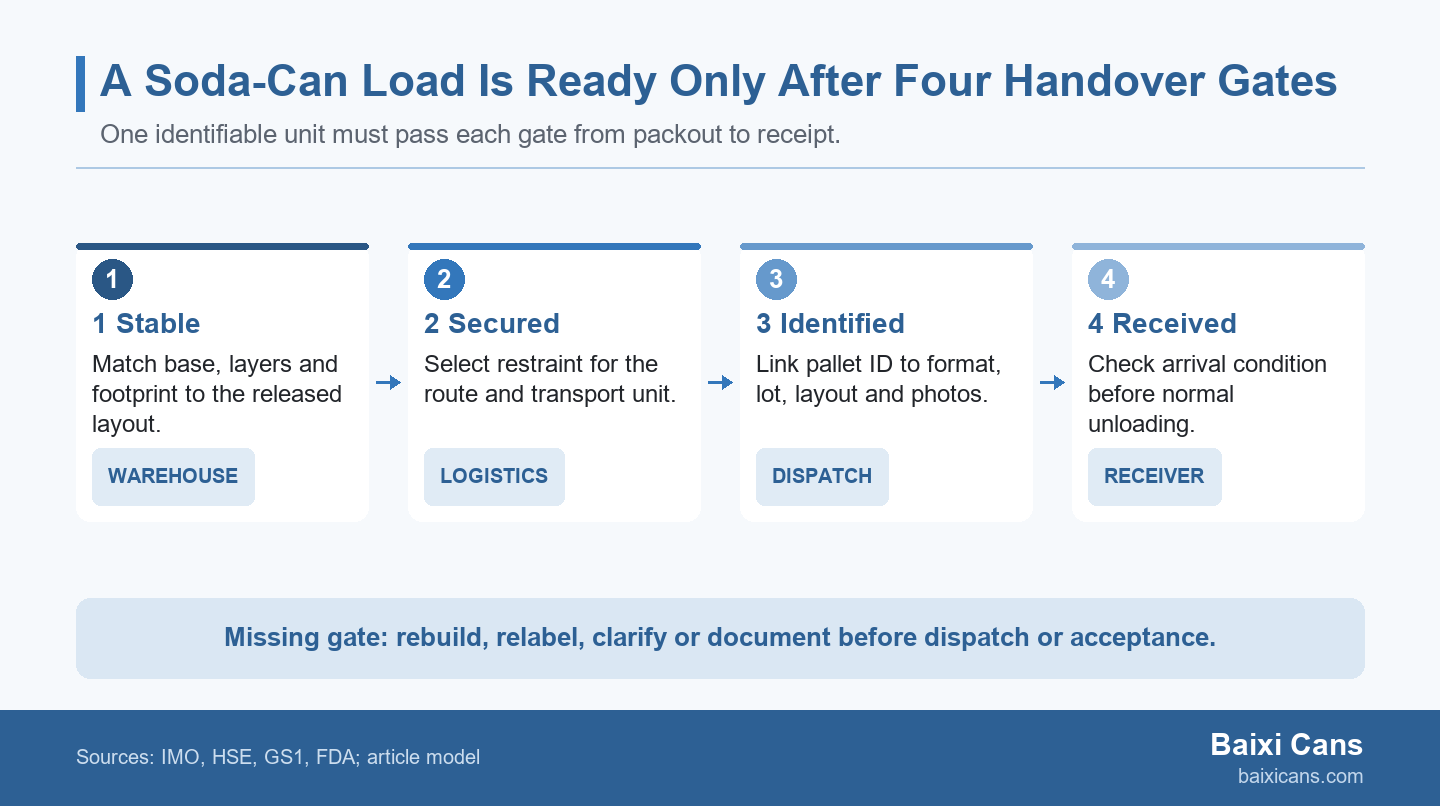
A four-point handover packet can combine format details, stable load evidence, route controls and receiving instructions before pickup. It gives the warehouse, carrier and receiver one record to use when a question arises, instead of three partial versions of the shipment. Send it early enough for the receiver and carrier to flag a mismatch while the pallet can still be rebuilt.
The packet is a control tool, not a substitute for carrier instructions, site safety procedures or local rules. Baixi Cans can support the product-format conversation, while the shipper should retain ownership of the final transport and receiving plan. When the can format, packout or route is still being decided, share your format and packout details for review before booking pickup.
For commercial quantities, use a stable unit load whenever the handling path includes forklifts, transfers or container loading; loose cases make movement and receiving control harder. The pallet plan should specify the cases, layers, base and identification that travel together. A smaller local delivery may have a different method, but the same question remains: can the receiver verify what was released before normal handling changes the condition?
No—finished soda cans do not always need temperature-controlled transport; the requirement depends on the beverage, route, storage history and applicable rules. Use temperature control when the product specification or food-safety plan requires it, not as a default claim for every soda. A general article cannot replace the product's documented storage limits, contractual instructions or destination-specific obligations.
Photograph the pallet ID, all sides of the completed unit load, its restraint, the vehicle or container condition and the final door or seal state where applicable. Take the images after the final packout is confirmed, so they show the configuration that will actually travel. File them under the pallet identity with the lot and load plan; images without that link are harder to use during a receiving dispute.
Stop normal unloading, document the condition before restraints are removed and agree a safe inspection method with the carrier or site owner before moving the load. Identify the pallet and compare the arrival photographs with the dispatch record. The receiver may then unload, rebuild, isolate or conditionally release the pallet according to the agreed process, but should preserve the original condition first.

