
You’ve developed a breakthrough beverage formula. Your branding is polished. Your team is ready to launch.
Then comes the first packaging quote: 300,000 cans minimum order, $150,000 upfront.
This isn’t unusual—it’s how the traditional aluminum can industry has operated for decades.
But in 2026, the rules are changing.
From Rippl’s 480-can minimums to NOMOQ’s single-can production, low MOQ aluminum can manufacturing is unlocking new possibilities for emerging beverage brands.
This guide breaks down the technology, cost models, and sourcing strategies behind small-batch aluminum can production.
Traditional MOQs lock a disproportionate amount of capital into non-revenue-generating inventory at the earliest stage of a brand’s lifecycle.
For new beverage brands, committing to 300,000 cans often means allocating $150,000–$200,000 before any product-market validation. This capital is effectively frozen in packaging inventory that may take months to convert into sales, significantly increasing financial risk and limiting strategic agility.
Long inventory turnover cycles reduce the ability to respond to real-time market feedback.
A typical production-to-sales cycle can extend from 6–8 weeks of manufacturing and shipping to 3–6 months of inventory sell-through. During this period, brands cannot easily pivot in response to customer preferences, competitor activity, or seasonal demand shifts.
Cash flow constraints directly impact growth-critical investments.
When a large portion of capital is tied up in packaging, brands often underinvest in marketing, distribution expansion, and retail partnerships—areas that are far more influential in determining early-stage success.
Traditional MOQs lock a disproportionate amount of capital into non-revenue-generating inventory at the earliest stage of a brand’s lifecycle.
For new beverage brands, committing to 300,000 cans often means allocating $150,000–$200,000 before any product-market validation. This capital is effectively frozen in packaging inventory that may take months to convert into sales, significantly increasing financial risk and limiting strategic agility.
Long inventory turnover cycles reduce the ability to respond to real-time market feedback.
A typical production-to-sales cycle can extend from 6–8 weeks of manufacturing and shipping to 3–6 months of inventory sell-through. During this period, brands cannot easily pivot in response to customer preferences, competitor activity, or seasonal demand shifts.
Cash flow constraints directly impact growth-critical investments.
When a large portion of capital is tied up in packaging, brands often underinvest in marketing, distribution expansion, and retail partnerships—areas that are far more influential in determining early-stage success.
Low MOQ removes the economic barrier to creative experimentation in packaging design.
Brands are no longer forced to commit to a single design for hundreds of thousands of units, allowing them to test bold visuals, storytelling-driven branding, and niche positioning strategies.
Multiple SKUs can be launched simultaneously to identify high-performing variants.
Instead of relying on assumptions, brands can test different flavors, color schemes, or messaging approaches in parallel and scale only the best-performing options.
Cross-industry collaborations become easier to execute.
Partnerships with artists, influencers, or other brands can be produced in limited runs, creating unique products that drive engagement and brand differentiation.

Traditional offset printing requires separate metal plates for each color layer, increasing setup complexity.
A typical design may require multiple plates, each representing a different color, which must be precisely aligned during production.
High upfront tooling costs necessitate large production volumes to achieve cost efficiency.
These fixed costs are only economical when distributed across hundreds of thousands of units, which is why manufacturers impose high MOQs.
Production lines are optimized for long, uninterrupted runs rather than frequent changeovers.
Switching designs involves downtime, recalibration, and potential material waste, making small orders operationally inefficient.
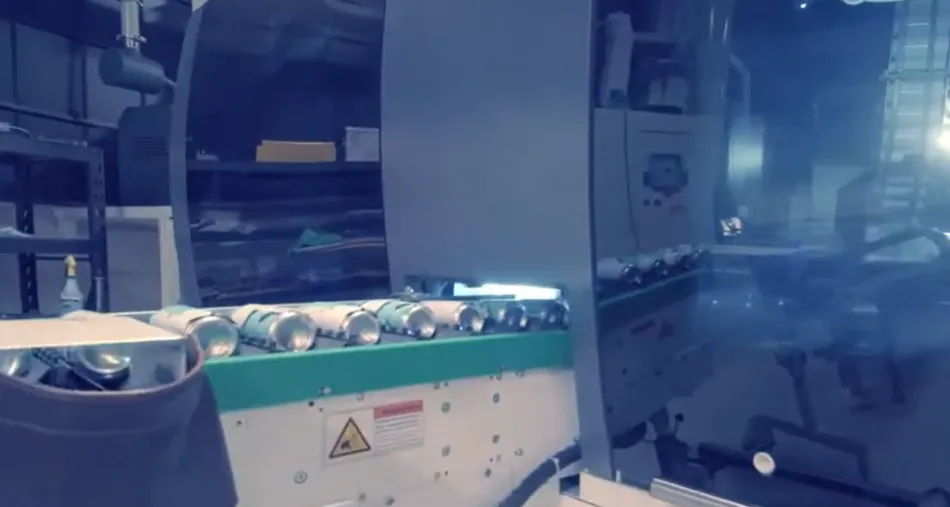
Digital direct-to-can printing eliminates the need for physical printing plates, significantly reducing setup costs.
This allows even small orders to be economically viable, as there are no fixed tooling costs to amortize.
Variable data printing enables each can to feature unique graphics or serialized designs.
This opens up opportunities for personalization, limited editions, and marketing campaigns that require differentiation at the unit level.
Changeover time between designs is reduced from hours to minutes.
This operational flexibility allows manufacturers to handle multiple small orders efficiently.
Design flexibility is dramatically increased.
Brands can incorporate gradients, photographic images, and complex visual elements that are difficult or costly to achieve with traditional printing.
Sustainability benefits are increasingly important.
By eliminating labels and shrink sleeves, digital printing reduces plastic waste and improves the recyclability of aluminum cans.
Blank aluminum cans provide a flexible base for small-batch customization.
These cans can be sourced at relatively low MOQs and paired with labeling solutions to achieve branding goals.
Shrink sleeves and digital printing each unlock different branding possibilities for low MOQ aluminum cans.
While sleeve labels offer flexibility and lower initial costs for small batches, digital direct-to-can printing enables premium finishes, precise color control, and more sustainable packaging outcomes.
However, additional processing steps increase operational complexity.
Label application requires extra equipment or manual labor, which can impact efficiency and consistency.
Environmental considerations must be evaluated.
Plastic labels may need to be removed during recycling, potentially reducing sustainability benefits.
👉 Learn more about the differences in this guide: How Sleeve Labels and Digital Printing Activate New Applications of Spot Colors?
Offers ultra-low MOQ production using digital printing
Provides full-service solutions including design and filling
Successfully entered retail channels like 7-Eleven Australia
Enables production starting from just 1 can
Offers premium finishes (matte, gloss, metallic)
Partners with Ardagh Metal Packaging
MOQ starts from one container (50,000–70,000 cans), balancing cost and flexibility.
This approach significantly reduces entry barriers compared to traditional 300,000-can requirements.
Vertical integration improves cost control and delivery reliability.
By managing raw materials, forming, coating, and printing in-house, Baixi minimizes supply chain disruptions.
High logistics efficiency with optimized can formats.
For example, the sleek 330ml soda can increases container loading density, reducing shipping costs per unit.
👉 Explore:
| Model | MOQ | Technology | Best For |
|---|---|---|---|
| NOMOQ | 1 can | Digital printing | Testing, personalization |
| Rippl | 480 cans | Digital printing | Events, small launches |
| Baixi | 50k–70k | Integrated manufacturing | Scalable startups |
Digital printing providers prioritize flexibility and speed over unit cost efficiency.
These suppliers are ideal for early-stage brands that need to validate concepts quickly without committing large budgets.
Small-batch aluminum can suppliers offer a balance between customization and affordability.
With MOQs typically ranging from 1,000 to 10,000 units, they enable brands to scale gradually while maintaining manageable costs.
Mid-scale OEM manufacturers provide a transition point toward full-scale production.
At volumes of 50,000–100,000 units, brands begin to benefit from economies of scale while still retaining customization options.
Large-scale manufacturers deliver the lowest unit costs but require strong demand forecasts.
These suppliers are best suited for established brands with stable sales channels and sufficient capital.
Plate-making costs are completely eliminated in digital printing workflows.
This removes one of the largest fixed costs associated with traditional manufacturing.
Raw material costs are higher for small batches due to reduced purchasing power.
Suppliers cannot negotiate bulk discounts, leading to higher per-unit aluminum costs.
Printing costs vary significantly depending on the technology used.
Digital printing has higher per-unit costs but offers unmatched flexibility and speed.
Setup and changeover costs are minimized but still present.
While digital systems reduce downtime, operational adjustments still require time and resources.
Unit price alone is not a reliable metric for decision-making in early-stage brands.
Focusing solely on per-unit cost can lead to overproduction and increased financial risk.
Total investment is the more critical factor for startups.
A smaller order with higher unit cost often results in significantly lower total expenditure.
Lower financial exposure enables faster experimentation and iteration.
Brands can test multiple concepts without risking large amounts of capital.

Ideal for testing and validation
Requires minimal investment
Enables rapid iteration
Balances cost and scale
Suitable for crowdfunding and regional launches
Provides early market validation
Enables full market entry
Offers competitive unit pricing
Requires stronger planning and forecasting
Material selection must meet industry standards such as 3104 aluminum alloy.
This ensures structural integrity, pressure resistance, and compatibility with carbonation.
Can dimensions must align with filling line specifications.
Mismatched dimensions can lead to inefficiencies or equipment compatibility issues.
Internal coatings must comply with global food safety regulations.
BPA-NI coatings are increasingly required, particularly in EU markets after 2026.
Printing quality standards must be clearly defined.
Color accuracy, registration, and finish quality are critical for brand consistency.
👉 Learn more: How to Start an Aluminum Can OEM Project with a China Factory?
Digital printing adoption is accelerating as equipment costs decline.
Industrial-grade machines are becoming more accessible, enabling more suppliers to enter the market.
MOQ thresholds are decreasing across all supplier categories.
What was once considered a high-volume industry is becoming increasingly flexible.
Customization and sustainability are driving industry transformation.
Brands that embrace these trends will gain competitive advantages in both marketing and compliance.
Low MOQ aluminum can manufacturing is transforming how beverage brands launch and scale.
You no longer need 300,000 cans to start
You can test with as little as 1,000—or even 480
You can iterate faster and reduce risk
Suppliers like Qingdao Baixi demonstrate how integrated manufacturing—from raw materials to printing—enables 100% on-time delivery and a 33% reorder rate, proving the value of a stable and scalable supply chain.
👉 Ready to start?
Contact us for a free consultation on low MOQ aluminum can solutions tailored to your brand stage.
It depends on the technology. Digital printing allows MOQs as low as 1–480 cans, while traditional manufacturing typically starts at 50,000+.
Yes per unit, but total investment is significantly lower, making them ideal for startups.
Yes. Digital printing enables full customization, including variable designs.
Start with low MOQ for testing, then scale to larger volumes once demand is validated.

