Central Asia is emerging as one of the world’s fastest-growing beverage markets. With a combined population exceeding 76.2 million, a median age of just 27, and GDP growth rates ranging from 4.5% to 6.4%, demand for aluminum beverage cans is accelerating rapidly.
Central Asia is emerging as one of the world’s fastest-growing beverage markets. With a combined population exceeding 76.2 million, a median age of just 27, and GDP growth rates ranging from 4.5% to 6.4%, demand for aluminum beverage cans is accelerating rapidly.
However, sourcing for this region is not straightforward. Importers must navigate:
- fragmented logistics infrastructure
- evolving EAEU compliance requirements
- rising competition from local production (especially Uzbekistan)
This guide provides a practical sourcing roadmap, combining market data with real export experience from manufacturers like Baixicans.
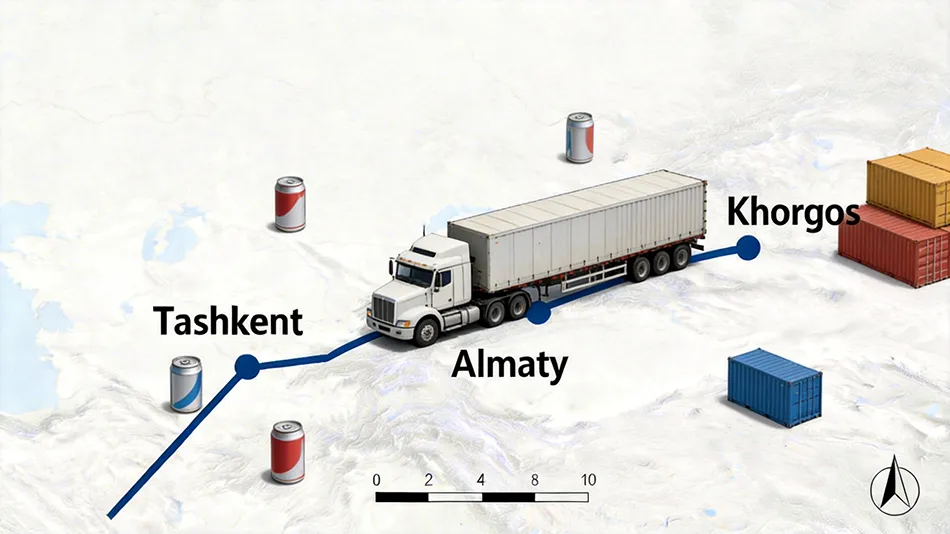
Understanding the Central Asian Aluminum Can Market
Key Market Drivers
- Strong economic growth is driving beverage consumption expansion across all five Central Asian countries.
GDP growth rates consistently outperform global averages, which translates into increased disposable income and higher demand for packaged beverages such as soft drinks, energy drinks, and beer.
- Urbanization is accelerating and reshaping consumption habits toward packaged products.
As more consumers move into urban areas, traditional bulk beverages are being replaced by branded, ready-to-drink products that rely heavily on aluminum can packaging.
- A young population structure supports long-term demand growth.
With over 65% of the population in the working-age bracket (15–64), consumption patterns are shifting toward convenience, branding, and lifestyle-oriented products—key drivers for canned beverages.
- Infrastructure development is boosting distribution capabilities.
Government investments in housing, transportation, and retail networks are enabling wider product distribution, especially in Uzbekistan and Kazakhstan.

Uzbekistan’s First Can Plant: Opportunity Window
Implications for Importers
- Short-term (2026–2027): full dependence on imports creates a critical entry window.
Until the Uzbekistan plant becomes operational, importers rely almost entirely on foreign suppliers, giving Chinese manufacturers a strong competitive position.
- Supply chain instability increases demand for reliable exporters.
Price volatility and logistics disruptions make stable partners with integrated production systems more valuable than ever.
- Mid-term (post-2027): local supply will emerge but not fully replace imports.
Even with 1.1 billion can capacity, demand growth may outpace supply, especially for premium and printed cans.
- Technology differentiation will become the key competitive factor.
Features such as lightweighting, BPA-NI coatings, and high-quality printing will distinguish exporters from local manufacturers.
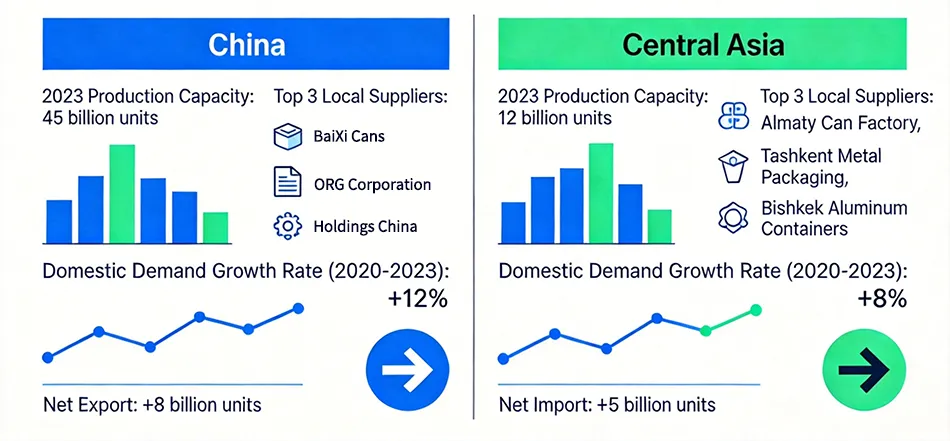
China vs Local Sourcing Strategy
Why Importers Still Choose China
- Immediate availability enables faster market entry.
Chinese suppliers can begin production immediately, while local Central Asian manufacturing capacity is still under development.
- Flexible MOQ reduces financial risk for new brands.
With options like 1 container (50,000–70,000 cans), brands can test markets without committing to large-scale inventory.
- Advanced manufacturing capabilities ensure consistent quality.
Technologies such as high-speed inspection systems, precision forming, and integrated lid matching reduce defect rates.
- Export experience ensures smoother compliance and documentation handling.
Experienced exporters understand EAEU regulations, documentation, and customs clearance processes.
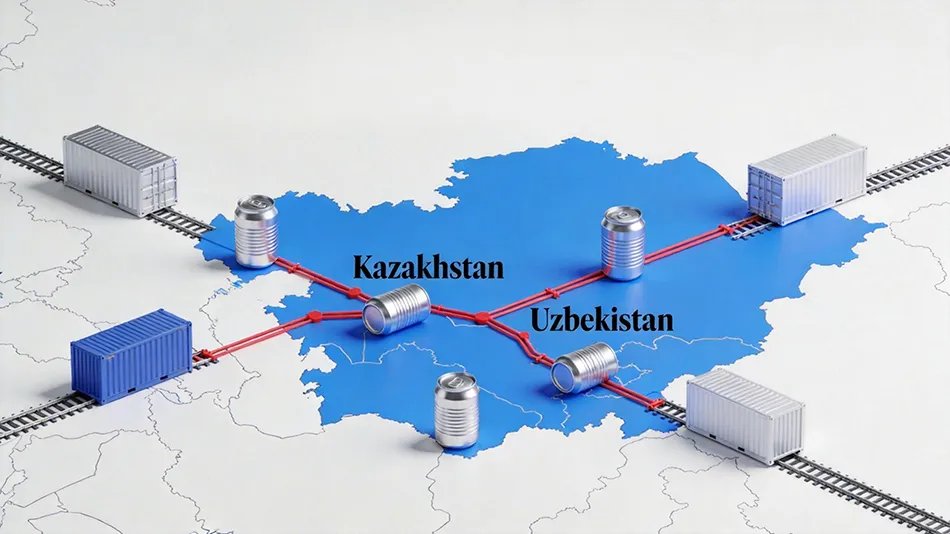
Logistics: The Real Competitive Edge
Shipping Considerations
- Rail transport offers the best balance between speed and cost.
Compared to sea freight, rail reduces transit time by 3–4 weeks, making it ideal for fast-growing markets.
- Container optimization directly impacts landed cost.
Choosing the right can size (e.g., sleek 330ml soda can)improves loading efficiency and reduces per-unit logistics costs.
- Seasonal disruptions must be factored into planning.
Winter conditions in Central Asia can delay rail shipments, requiring buffer time in supply chain planning.
- Customs documentation accuracy is critical for avoiding delays.
Missing or incorrect EAEU compliance documents can result in clearance delays or additional costs.
Regulatory & Compliance (EAEU Focus)
Key Compliance Requirements
- EAEU certification is mandatory for entering major Central Asian markets.
Countries like Kazakhstan and Kyrgyzstan follow unified technical regulations, requiring proper documentation and conformity declarations.
- Food-contact material safety standards must be strictly followed.
Aluminum cans must comply with migration limits and coating safety standards to ensure consumer safety.
- Anti-dumping policies can affect sourcing strategy.
Importers must stay updated on trade policies affecting aluminum materials to avoid unexpected cost increases.
- Full documentation is essential for smooth customs clearance.
This includes Certificates of Origin, test reports, and compliance declarations.
Step-by-Step Sourcing Process
Step 1 – Define Your Requirements
- Clearly specify can size, format, and application scenario.
Options like slim 250ml soda can or 450ml aluminum can should match your product positioning and filling line compatibility.
- Identify your target market and regulatory requirements early.
Different countries may have specific import rules, labeling standards, or certification requirements.
- Estimate annual demand to determine MOQ strategy.
This helps balance cost efficiency with inventory risk.
- Define branding and printing requirements in detail.
Include Pantone colors, gradients, and finish types to ensure accurate production.
Step 2 – Supplier Evaluation Checklist
- Verify export experience in Central Asian markets.
Suppliers with proven track records can better handle logistics and compliance challenges.
- Assess production capabilities and integration level.
Fully integrated manufacturers reduce coordination risks and improve quality consistency.
- Confirm MOQ flexibility and scalability options.
This ensures the supplier can support both testing and large-scale production.
- Evaluate compliance support and documentation readiness.
Suppliers should provide complete EAEU and international certification documents.
Step 3 – Sampling & Testing
- Request physical samples to evaluate real product quality.
This includes checking printing precision, coating integrity, and structural consistency.
- Conduct filling line compatibility testing.
Ensure the cans perform well under actual production conditions.
- Test sealing performance and pressure resistance.
This is critical for carbonated beverages.
- Perform shelf-life and durability testing if necessary.
Especially important for export scenarios involving long transit times.
Step 4 – Order & Delivery
- Finalize contract terms including specifications and delivery timelines.
Clear agreements reduce risk of misunderstandings.
- Monitor production progress to ensure schedule adherence.
Regular updates help avoid delays.
- Arrange pre-shipment inspection for quality assurance.
Third-party inspections can add an extra layer of security.
- Plan logistics and customs clearance in advance.
Coordinated shipping ensures timely delivery.
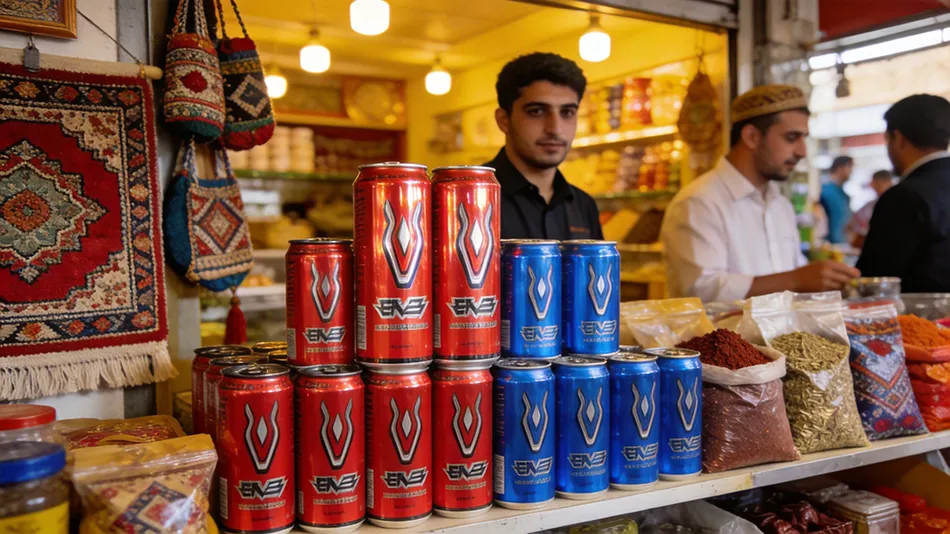
Case Study: How Baixicans Helped a Kazakh Brand Scale
Project Background
- The client was a fast-growing functional beverage brand in Kazakhstan targeting urban young consumers.
The brand planned to launch a new electrolyte energy drink line positioned toward fitness enthusiasts and office professionals, requiring packaging that conveyed both premium quality and modern branding appeal.
- Key challenges included balancing cost control with high-quality packaging requirements.
The client needed aluminum cans with strong visual impact, but also had to manage tight startup budgets and uncertain initial demand.
- The brand required a supplier capable of supporting both small-scale testing and rapid scaling.
This included flexible MOQ, reliable logistics to Central Asia, and full compliance with EAEU food-contact standards.
Solution Provided by Baixicans
- Flexible MOQ strategy enabled low-risk market entry.
Baixicans recommended starting with 1 container (≈55,000 cans), allowing the client to test the market without committing to excessive inventory.
- Integrated manufacturing ensured high consistency and performance.
By producing can bodies, lids, and printing in one system, Baixicans eliminated compatibility issues and ensured stable sealing performance on the client’s filling line.
- Technical support improved packaging compatibility and efficiency.
Engineers assisted in optimizing can dimensions and neck specifications to match the client’s equipment, reducing filling line adjustments and downtime.
- Full compliance documentation simplified import procedures.
The supplier provided EAEU compliance documents, test reports, and certificates of origin, enabling smooth customs clearance in Almaty.
- Rail logistics ensured fast and predictable delivery timelines.
The shipment reached Kazakhstan within 16 days, significantly faster than traditional sea routes.
Results & Business Impact
- Successful market entry with strong retail penetration.
The product was launched in over 50 retail outlets across Almaty within the first month.
- High consumer acceptance driven by packaging quality.
Feedback highlighted the premium look and reliability of the cans, helping the brand stand out against competitors using lower-quality packaging.
- Rapid inventory turnover validated product-market fit.
The initial batch sold out within 3 months, confirming demand and enabling confident scaling.
- Scalable supply chain supported business growth.
The client increased orders to 2 containers, with plans to expand distribution into Uzbekistan and Kyrgyzstan
Future Outlook: Central Asia Aluminum Can Market Through 2030
Key Trends Shaping the Market
- Local manufacturing will grow, but imports will remain essential in the medium term.
While Uzbekistan’s new plant will reduce dependency, regional demand growth is expected to outpace local capacity, especially for premium and customized cans.
- Lightweighting technology will become a core competitive advantage.
As aluminum prices fluctuate, brands will prioritize suppliers who can reduce material usage while maintaining performance, directly lowering both production and logistics costs.
- Premiumization of beverage brands will drive demand for high-quality printing and design.
As competition intensifies, packaging will play a critical role in brand differentiation, increasing demand for advanced decoration capabilities.
- Sustainability requirements will become more prominent across the region.
Governments and consumers are increasingly favoring recyclable and environmentally friendly packaging, making aluminum cans a preferred choice.
- Regional trade policies may reshape sourcing strategies.
Changes in EAEU tariffs, anti-dumping measures, and bilateral agreements could impact cost structures and supplier selection.
Strategic Implications for Importers
- Short-term (2026–2027): act quickly to capture market share during the import-dominant phase.
Brands that establish distribution early will benefit from lower competition and stronger brand recognition.
- Mid-term (2027–2030): differentiate through quality, technology, and supply reliability.
As local production emerges, importers must compete on more than price—focusing on consistency and advanced capabilities.
- Long-term (2030+): build hybrid sourcing strategies.
Combining local sourcing with international suppliers can optimize cost, flexibility, and risk management.
- Partnerships will become more important than transactional sourcing.
Working with experienced manufacturers enables better forecasting, faster response times, and long-term cost optimization.
Conclusion & Action Plan
Key Takeaways
- Central Asia represents one of the fastest-growing aluminum can markets globally.
Strong economic growth, urbanization, and a young population are driving sustained demand for packaged beverages.
- The 2026–2027 window is critical for importers and beverage brands.
Before local manufacturing reaches scale, international suppliers—especially from China—offer the best combination of cost, quality, and availability.
- Supplier selection is the most important success factor.
Integrated manufacturers like Baixicans reduce risk, improve quality consistency, and simplify logistics and compliance.
- Logistics strategy directly impacts profitability.
Efficient rail transport and container optimization can significantly reduce landed costs.
Action Plan for Importers
- Step 1: Define your sourcing strategy based on market entry goals.
Determine whether you are testing the market or preparing for large-scale distribution, and align your MOQ and supplier choice accordingly.
- Step 2: Shortlist experienced aluminum can exporters with Central Asia expertise.
Prioritize suppliers who understand EAEU regulations and have proven logistics capabilities.
- Step 3: Validate product quality through sampling and testing.
Ensure compatibility with your filling line and confirm coating, printing, and structural performance.
- Step 4: Optimize logistics planning to reduce cost and risk.
Select the most efficient shipping route and prepare all required documentation in advance.
- Step 5: Build a long-term partnership rather than focusing only on price.
Reliable suppliers provide consistency, scalability, and strategic support as your business grows.
Call to Action
Ready to enter the fast-growing Central Asian beverage market with confidence?
Partner with a proven manufacturer like Baixicans, offering:
- Flexible MOQ starting from 1 container
- Advanced lightweighting technology (up to 12% material savings)
- Integrated production (can + lid + printing)
- Proven export experience across Kazakhstan and Uzbekistan
👉 Contact Us today for a free consultation and sample support, and start building a reliable aluminum can supply chain for Central Asia.
FAQ
1. What is the best way to ship aluminum cans to Central Asia?
Rail transport is typically the most efficient option, offering a balance between cost and speed, with delivery times of 12–18 days to Kazakhstan.
2. What MOQ should I start with?
Most importers begin with 1 container (50,000–70,000 cans) to test the market before scaling.
3. Do I need EAEU certification?
Yes, EAEU compliance is required for countries like Kazakhstan and Kyrgyzstan, including documentation such as DoC and test reports.
4. Can Chinese suppliers meet EU-level standards?
Yes. Leading manufacturers like Baixicans provide BPA-NI coatings and international compliance, meeting both EU and global standards.